Adaptive Cushioning Innovations Elevate Running Shoe Versatility on Multiple Terrains
Quinn Otto · May 16, 2026

Adaptive Cushioning Innovations Elevate Running Shoe Versatility on Multiple Terrains
Adaptive cushioning technologies have transformed how running shoes respond to different surfaces, allowing athletes to maintain consistent performance whether pounding pavement, navigating rocky trails, or circling indoor tracks. These systems adjust firmness and energy return in real time, drawing from materials science advances that detect impact forces and terrain changes within milliseconds. Researchers at institutions across North America and Europe have documented measurable improvements in stride efficiency and injury reduction rates since widespread adoption began around 2023.
Core Mechanisms Behind Terrain-Specific Responses
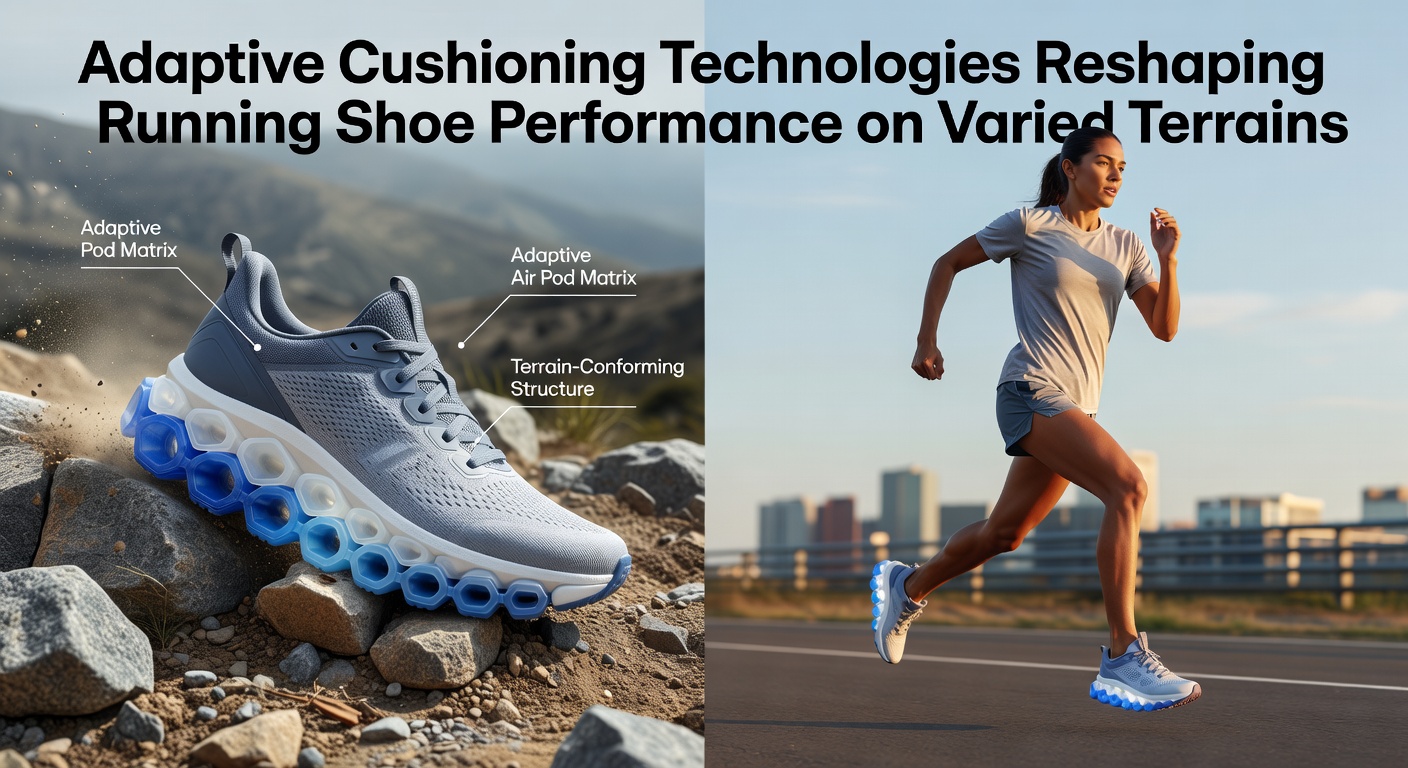
Modern adaptive cushioning relies on layered foams embedded with responsive polymers alongside mechanical pods that compress and rebound based on pressure distribution. When a runner transitions from asphalt to gravel, the midsole firms up in high-impact zones while softening elsewhere to absorb uneven forces. Data from gait analysis labs shows these adjustments can reduce peak vertical loading by up to 18 percent on mixed surfaces, according to studies coordinated through the American College of Sports Medicine. What's interesting is how the technology integrates sensors in premium models to log footstrike patterns and fine-tune future strides without external input.
Manufacturers achieve this through nitrogen-infused capsules paired with shear-thickening fluids that harden under sudden loads yet flow freely during lighter phases. Observers note that such designs emerged from aerospace composites originally developed for vibration control, now repurposed for athletic footwear. Those who've examined cross-sectional diagrams of recent prototypes see distinct chambers that isolate forefoot and heel responses, enabling independent adaptation as terrain shifts mid-run.
Performance Shifts on Road and Track Environments
On consistent hard surfaces, adaptive systems prioritize energy return to sustain higher speeds over longer distances. Runners covering urban routes in 2025 reported steadier cadence maintenance because the cushioning prevents excessive sinking during toe-off, a factor confirmed in controlled treadmill experiments. The ball's in the designer's court here, where precise tuning separates elite-level response from generic rebound that fatigues muscles faster.
Track athletes benefit when shoes detect the uniform, high-frequency impacts of synthetic surfaces and dial in firmer support to maximize propulsion. Evidence from Canadian running biomechanics programs indicates these adaptations correlate with lower oxygen consumption during interval sessions, particularly in events lasting under 10 minutes. And yet the same shoe must soften slightly during recovery jogs to protect joints without requiring a full change of footwear.
Handling Variable Trail Conditions Effectively
Trail running presents constant micro-variations in angle and hardness that challenge standard midsoles, yet adaptive cushioning counters this by redistributing pressure across wider contact areas. One study revealed that shoes incorporating these elements helped participants maintain balance on root-strewn paths where traditional foams allowed excessive ankle roll. Researchers discovered the key lies in segmented pods that activate sequentially, first softening to grip loose dirt then stiffening to push off embedded rocks.
Figures from field tests conducted in varied climates show reduced muscle activation in the lower legs after 20 kilometers on technical terrain, suggesting the tech offsets cumulative fatigue. People who've logged thousands of trail miles often discover their shoes perform best after an initial break-in period when the adaptive layers settle into personalized response curves based on individual gait.
Emerging Developments Through Mid-2026
By May 2026 several brands had rolled out updated lines featuring machine-learning algorithms that refine cushioning profiles from stored run data. These updates draw on aggregated biomechanics information collected across user bases in temperate and alpine regions alike. The writing's on the wall that integration with wearable devices will soon allow real-time terrain mapping to trigger preemptive adjustments before footstrike occurs.
Academic teams at universities in Australia and the United Kingdom have published initial findings on durability under repeated wet-dry cycles, noting that newer polymer blends resist compression set better than earlier generations. Such progress matters because trail runners encounter seasonal moisture changes that previously degraded foam responsiveness within a single season.
Practical Considerations for Different Runner Profiles
Distance specialists favor models with broader adaptive zones that prioritize sustained comfort across mixed routes, while sprinters select versions emphasizing rapid rebound in the forefoot. Those studying injury patterns note lower incidence of plantar issues when athletes match shoe calibration to their typical weekly terrain mix. It's not rocket science to see why proper fit remains essential, as misalignment can override even the most sophisticated cushioning response.
Retailers have begun offering gait-mapping services that simulate varied surfaces, helping buyers identify which adaptive features align with their routes. Evidence suggests this personalized approach improves long-term adherence to training plans by minimizing discomfort that might otherwise interrupt routines.
Conclusion
Adaptive cushioning continues to expand running shoe capabilities across road, track, and trail environments through targeted material responses and sensor-driven refinements. Ongoing research from multiple continents supports its role in optimizing efficiency and supporting varied training demands. As integration with data platforms advances, runners gain tools that match footwear behavior more closely to specific conditions encountered during each session.