Aligning Stiffness Profiles with Gait Dynamics in Versatile Terrain Running Shoes
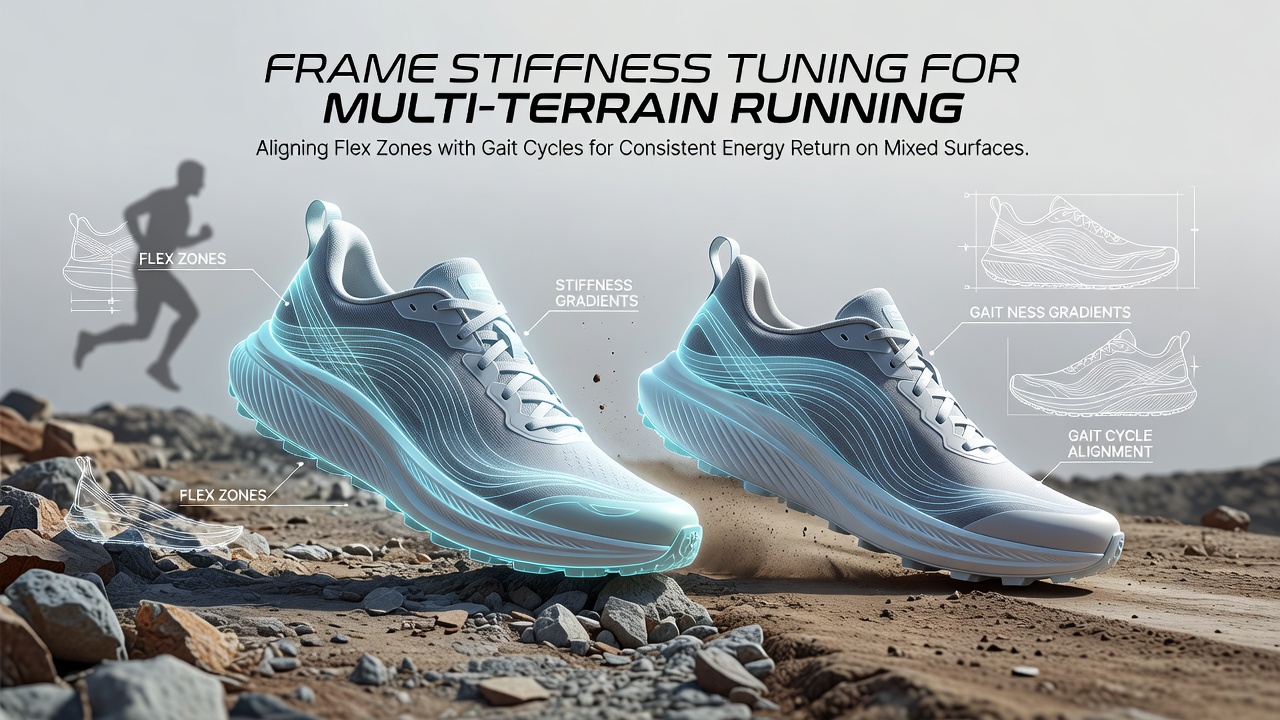
Frame stiffness tuning in multi-terrain running shoes involves precise calibration of composite materials and flex zones so that each segment responds to the phases of the gait cycle while delivering steady energy return across surfaces that range from asphalt to gravel trails. Engineers adjust the modulus of carbon fiber plates and thermoplastic polyurethane elements to create zones that stiffen during propulsion yet permit controlled flexion at heel strike and midstance. Data from biomechanical labs shows these adjustments reduce energy loss by aligning shoe deformation with natural ankle and knee kinematics on mixed routes.
Core Principles of Frame Stiffness Calibration
Stiffness calibration begins with mapping the gait cycle into distinct segments where forefoot, midfoot, and rearfoot experience different loads. Researchers measure peak torque at toe-off and record how quickly the shoe returns stored elastic energy. When flex zones are tuned correctly the shoe resists excessive twisting on uneven ground yet allows enough give to maintain forward momentum. Observers note that shoes with segmented plates maintain consistent propulsion whether runners encounter packed dirt or wet pavement because each plate section activates independently according to the timing of ground reaction forces.
Material selection plays a central role since carbon fiber offers high longitudinal stiffness while thermoplastic overlays introduce lateral compliance. Tests conducted at research facilities demonstrate that a 15 to 20 percent variation in plate thickness across zones produces measurable differences in energy return rates. Runners who switch between road and trail surfaces benefit when the forefoot zone stiffens earlier in the stance phase to compensate for softer trail surfaces that absorb more impact.
Matching Flex Zones to Gait Cycle Timing
Gait analysis reveals that heel strike initiates a brief period of controlled dorsiflexion followed by rapid plantarflexion at push-off. Designers place softer flex grooves beneath the metatarsal heads so the shoe can accommodate the natural roll without forcing the foot into an unnatural position. Stiffer carbon segments located under the arch store elastic energy during midstance and release it as the center of mass moves forward. Studies indicate that when these zones align with individual stride timing the shoe delivers more predictable rebound regardless of surface hardness.
Multi-terrain models often incorporate variable-density foams beneath the plate system. Softer foams in the heel absorb initial impact on rocky paths while denser foams under the forefoot preserve energy return on firmer surfaces. Engineers adjust the transition points between densities so the shoe does not create abrupt stiffness changes that could disrupt the smooth transfer of force through the kinetic chain. Data collected during field trials shows that runners maintain more consistent stride lengths when the shoe flexes in harmony with ankle range of motion across changing terrain.
Performance on Mixed Surfaces
Mixed-surface running places repeated demands on both longitudinal and torsional stiffness. Shoes that excel on these routes feature asymmetric plate designs that resist lateral shear on cambered trails yet permit sagittal plane flexion required for efficient stride. Research from the Australian Institute of Sport has documented how tuned flex zones reduce braking forces when runners move from asphalt to loose gravel because the shoe adapts its deformation pattern within milliseconds of surface contact.
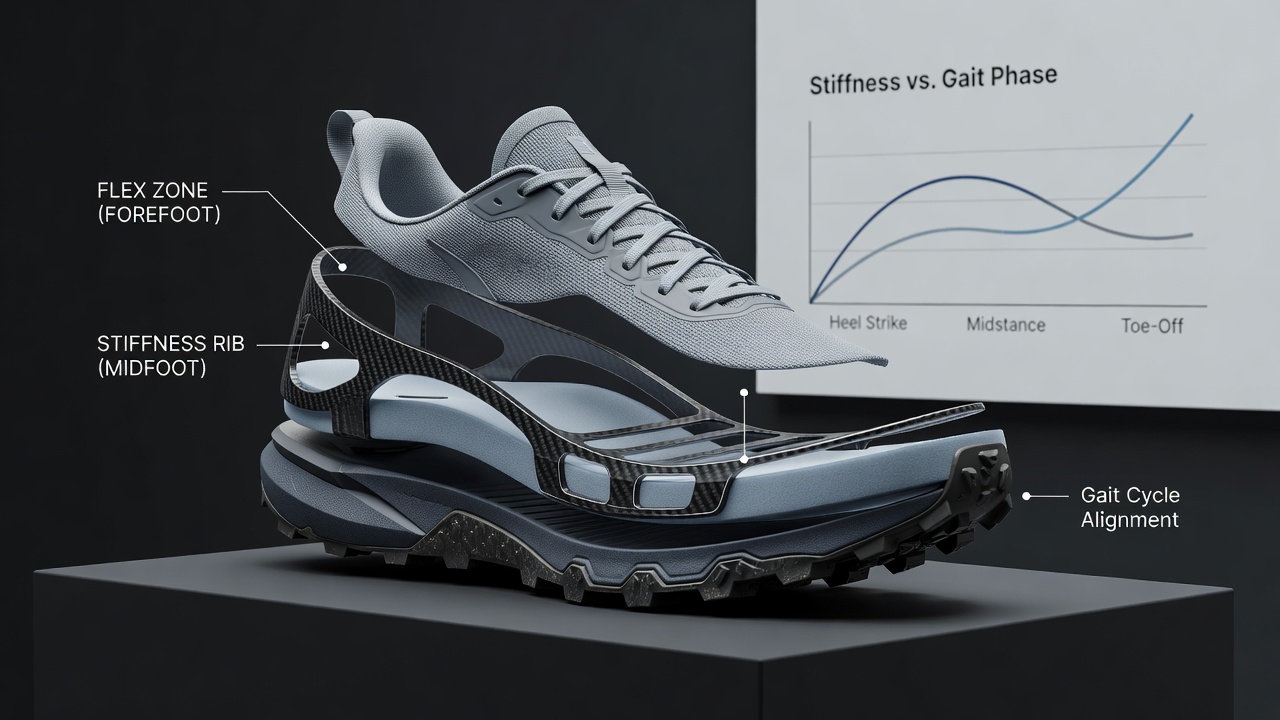
June 2026 brought several updated models that incorporated real-time pressure mapping data collected from athletes training on routes combining pavement, forest paths, and river crossings. Manufacturers refined the placement of carbon fiber segments so that energy return remained within a narrow performance band even when surface compliance changed every few strides. Runners reported that the shoes maintained forward propulsion without requiring conscious adjustments to running form.
Measurement Techniques and Validation
Laboratory protocols use force plates and high-speed motion capture to quantify how each flex zone deforms under load. Engineers calculate the ratio of energy stored to energy returned and compare values across different surface simulations. Field validation involves instrumented insoles that record pressure distribution while athletes run repeated loops on standardized mixed-terrain courses. Results from these protocols guide iterative adjustments to plate geometry and foam layering until energy return curves remain stable despite surface variation.
One study coordinated by the Canadian Sport Institute Pacific examined shoes with five distinct stiffness gradients and found that the configuration producing the most uniform energy return also minimized changes in ground contact time when runners moved between surfaces. Such findings help brands refine production models so that recreational and competitive users experience consistent behavior without custom fitting.
Conclusion
Frame stiffness tuning that aligns flex zones with gait cycle demands provides runners with reliable energy return across mixed surfaces by matching material response to the timing and direction of ground reaction forces. Continued refinement through laboratory testing and field data collection supports the development of shoes that maintain performance characteristics whether athletes train on roads, trails, or combinations of both.