Composite Material Innovations in Cycling Shoes for Improved Power Transmission on Steep Inclines
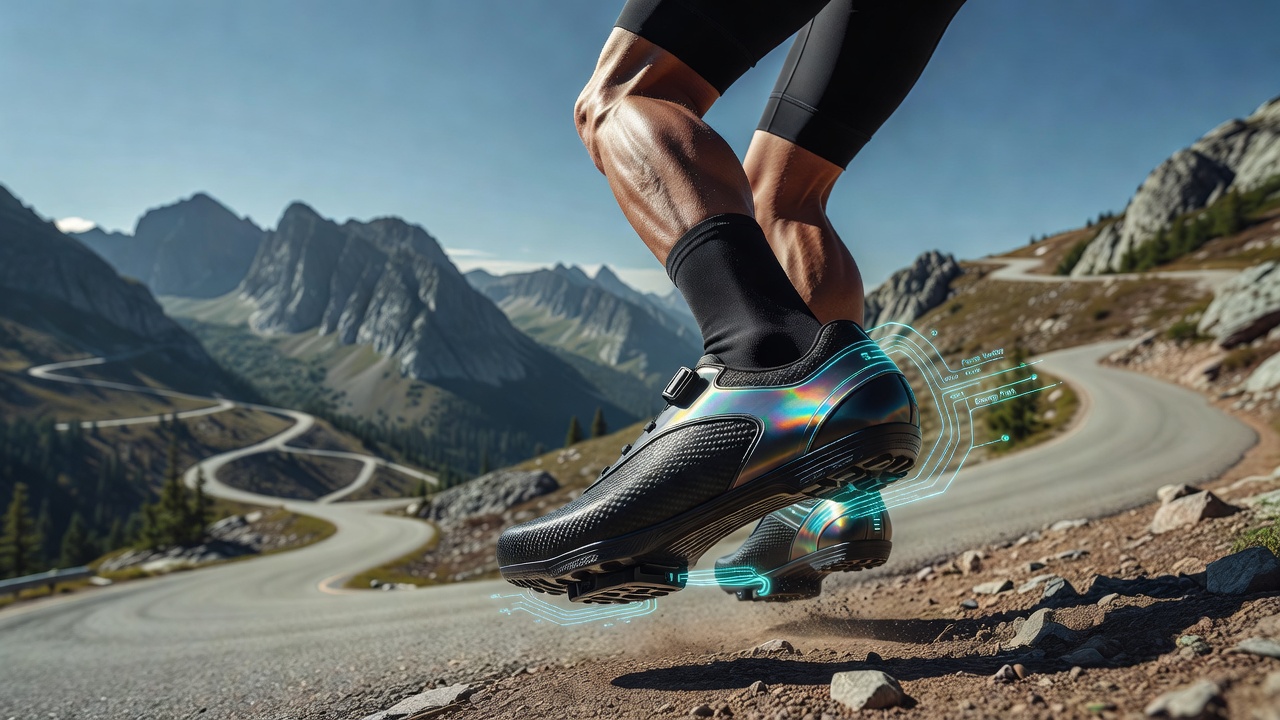
Cycling shoes built with blended composite materials deliver measurable gains in power transfer when riders tackle steep climbs, because these soles combine carbon fibers with resins and polymers to create structures that resist flex while remaining lightweight. Engineers select specific fiber orientations and matrix blends to match the demands of high-torque pedaling, where every watt counts against gravity. Data from industry testing shows that stiffer soles reduce energy loss at the shoe-pedal interface, allowing more force to reach the drivetrain during sustained efforts on gradients exceeding 10 percent.
Material Composition and Structural Properties
Manufacturers layer unidirectional carbon fiber with epoxy resins and occasional thermoplastic reinforcements, creating soles whose elastic modulus exceeds traditional nylon composites by significant margins. These blends undergo precise layup schedules that align fibers along the primary force vectors generated during the pedal stroke, and the resulting laminate resists deformation under loads that reach several hundred newtons at the cleat interface. Researchers have documented how varying the resin-to-fiber ratio alters both torsional stiffness and impact resistance, giving product developers options to tune performance for different rider weights and climb profiles.
Mechanics of Power Transfer on Inclines
On steep climbs the rider applies force through a narrow range of crank angles, and any sole flex dissipates energy before it reaches the chainring. Composite blends minimize this loss by maintaining a near-rigid platform that transmits downward and rotational forces efficiently, and laboratory measurements using instrumented pedals confirm that shoes with higher-modulus soles produce greater average power output for the same rider input. The interface between cleat and sole also benefits from the dimensional stability of these materials, which keeps the foot position consistent even when the shoe encounters repeated high-torque cycles.
Performance Data from Controlled Testing
Independent laboratories have recorded power-transfer efficiencies above 95 percent in composite-soled shoes during simulated climb protocols, compared with lower figures for conventional constructions. One study tracked elite riders on a 12-percent grade treadmill and found that shoes incorporating hybrid carbon-polymer matrices reduced pedal stroke variability by measurable amounts, which correlates with steadier cadence maintenance. These findings align with data collected by the Union Cycliste Internationale during equipment compliance checks, where sole stiffness thresholds help ensure fair competition.
What's interesting is how temperature and humidity affect these composites during long mountain stages. Some resin systems maintain their modulus across a wide thermal range, whereas others show slight softening that engineers counteract through fiber sizing treatments. Riders who compete in varied climates therefore benefit from blends formulated for environmental stability, and manufacturers publish specification sheets that detail modulus retention after accelerated aging tests.
Integration with Pedal Systems and Cleat Designs
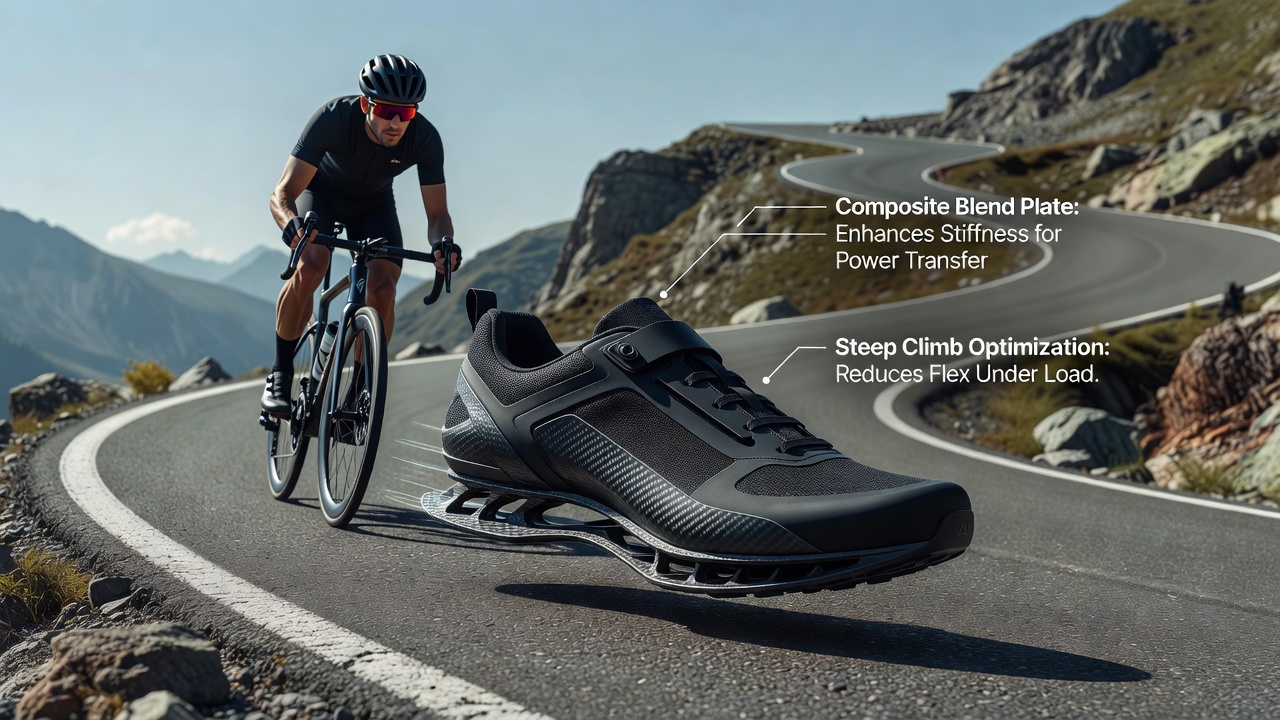
Composite soles accept metal cleat hardware with minimal creep over time, preserving the precise fore-aft and lateral positioning that optimizes knee tracking. Three-bolt patterns distribute loads across a broader area of the laminate, reducing stress concentrations that could initiate delamination. When paired with modern pedal bodies that feature low stack heights, these shoes create a shorter lever arm between the foot and the spindle, further enhancing the directness of force application on steep sections where momentum is limited.
Observers note that professional teams began specifying custom composite layups in June 2026 following wind-tunnel and field data that demonstrated consistent watt savings on repeated climbs. Those adjustments involved increasing the percentage of high-modulus fibers in the midfoot region while retaining some compliance in the toe box for comfort during long events. The resulting shoes appeared in multiple Grand Tour mountain stages that summer, and timing data indicated small but repeatable improvements in segment times.
Manufacturing Processes and Quality Control
Production begins with pre-impregnated fiber sheets cut by automated cutters that follow digital patterns derived from finite-element analysis. Layup technicians place each ply according to stress-mapping models, then the assembly enters an autoclave or out-of-autoclave press where heat and pressure consolidate the matrix. Post-cure machining creates the cleat mounting holes and ventilation channels without compromising structural integrity. Quality checks include ultrasonic scanning for voids and three-point bend tests that verify compliance with published stiffness values.
Future Developments and Regulatory Context
Academic groups continue to explore nano-enhanced resins and recycled fiber streams that could lower the environmental footprint of these performance components while preserving mechanical properties. A report issued by the Australian Institute of Sport outlines ongoing trials of hybrid composites that incorporate bio-based polymers, and preliminary results suggest comparable power-transfer metrics. Regulatory bodies in the European Union have begun drafting guidelines on end-of-life recycling for sports equipment, which may influence how manufacturers design future sole constructions.
Conclusion
Composite material blends in cycling shoes have established a clear engineering pathway for improving power delivery on steep climbs through controlled stiffness, reduced mass, and reliable cleat integration. Continued refinement of fiber architectures and matrix formulations, supported by data from governing bodies and research institutions, ensures these components remain central to competitive and recreational cycling performance on challenging terrain.