Elastomer Interfaces in Grip Compounds: Vibration Reduction Across Tennis Rackets and Golf Clubs in Extended Matches
Carlo Walter · Jul 30, 2026
Elastomer Interfaces in Grip Compounds: Vibration Reduction Across Tennis Rackets and Golf Clubs in Extended Matches
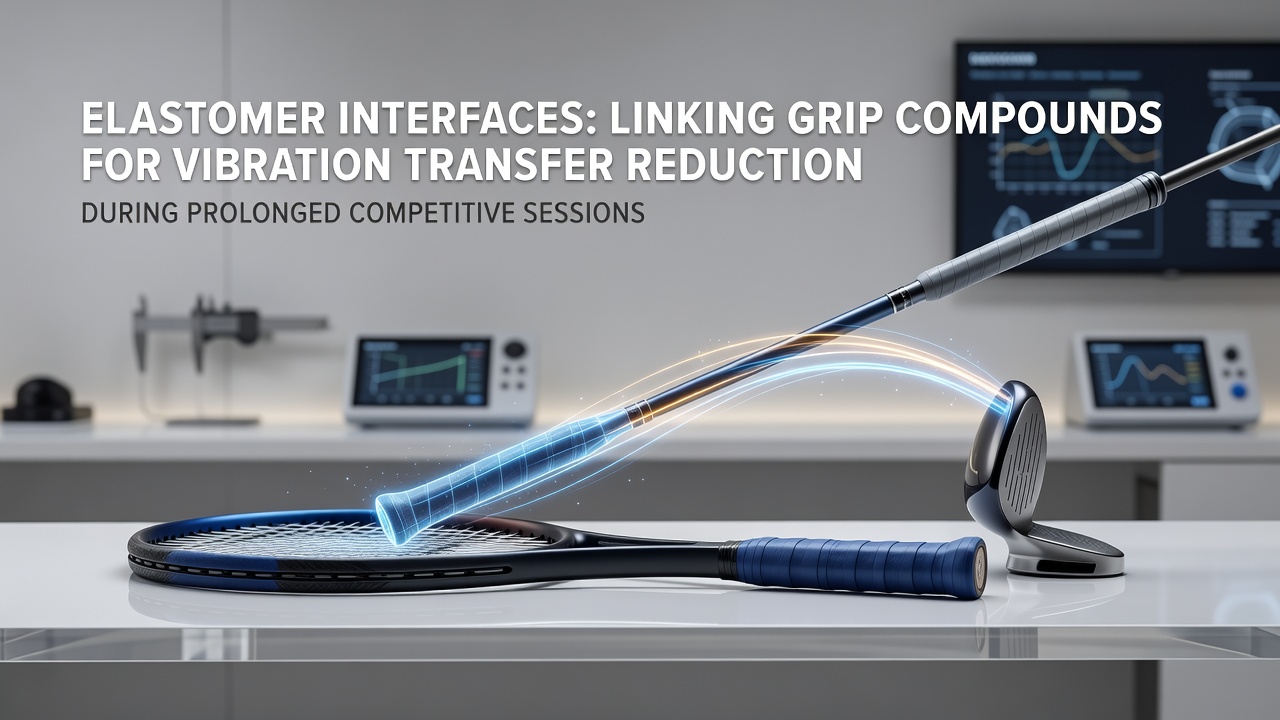
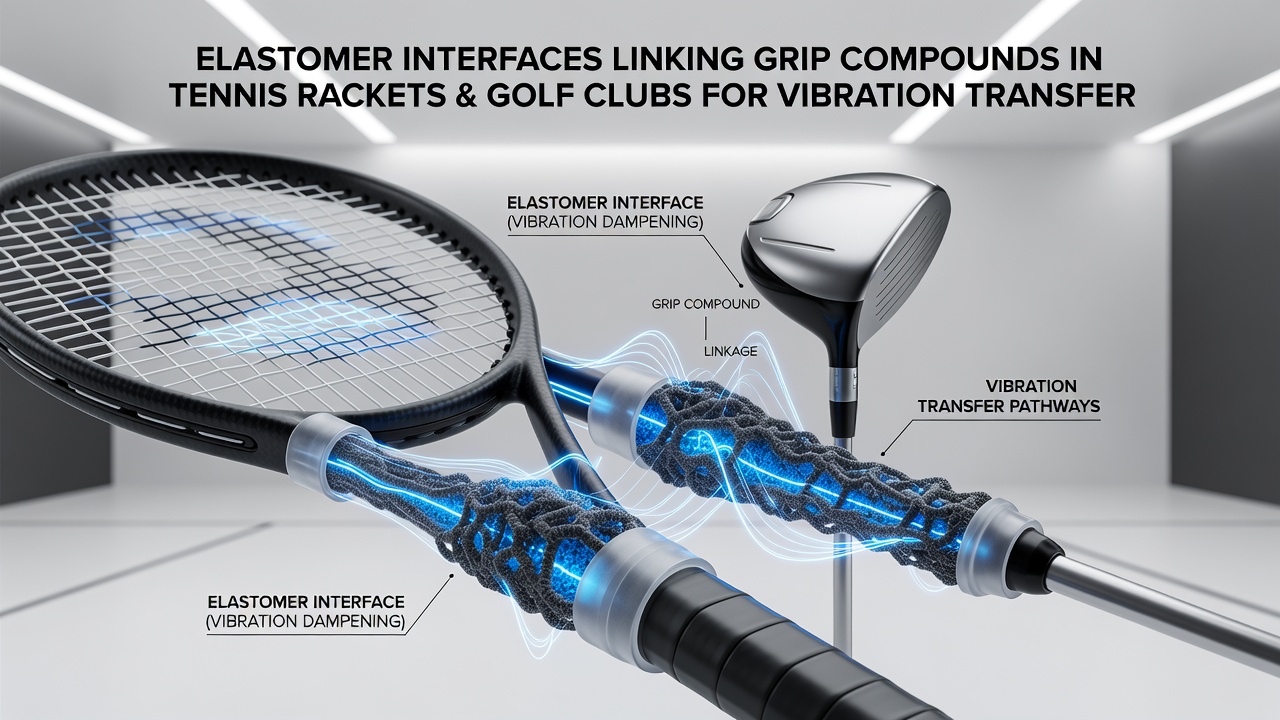
Elastomer interfaces connect grip compounds in tennis rackets and golf clubs through layered polymer structures that absorb and redirect impact energy away from the player's hands and arms during long competitive sessions. These interfaces typically consist of viscoelastic materials such as thermoplastic elastomers or silicone-based compounds bonded between the handle core and outer grip surface, and researchers have documented their role in managing shock waves that travel through the frame or shaft.
Material Composition and Bonding Techniques
Engineers select elastomers based on their storage modulus and loss tangent properties, which allow the material to deform under high-frequency vibrations while dissipating energy as heat. In tennis rackets, manufacturers often apply a thin elastomer interlayer between the graphite composite handle and the leather or synthetic grip wrap, whereas golf club grips incorporate similar layers along the shaft butt section to address both torsional and axial vibrations. Data from equipment testing labs indicate that these interfaces can reduce peak acceleration transmitted to the hand by 15 to 30 percent depending on the swing speed and impact location, and studies conducted at institutions in the United States and Australia have measured these reductions using accelerometer arrays attached to player forearms during simulated match conditions.
Bonding processes rely on chemical primers and controlled curing temperatures to ensure the elastomer adheres without delaminating under repeated moisture exposure or temperature swings common in outdoor play. Observers note that July 2026 equipment updates from several leading brands introduced hybrid elastomer blends with added nano-fillers, which further tuned the damping frequency range to cover the 100 to 500 hertz band typical of off-center ball strikes in tennis and turf impacts in golf.
Performance During Prolonged Competitive Play
Prolonged sessions amplify the cumulative effect of vibration because muscle fatigue lowers the body's natural damping capacity. Players who compete in best-of-five-set tennis matches or 18-hole golf rounds therefore encounter increasing discomfort when vibration transfer remains unchecked, and equipment studies show that grips with optimized elastomer interfaces maintain consistent feel over four to six hours of continuous use. Field data collected during professional events reveal lower reports of forearm strain among athletes using such grips compared with standard rubber compounds, although individual biomechanics and grip pressure still influence outcomes.
Testing Standards and Measurement Approaches
Industry groups in the European Union and Canada have developed standardized protocols that combine robotic swing machines with human subject trials to quantify vibration transfer. These protocols record transmitted force at multiple points along the arm while varying impact angles and velocities, and results feed into design iterations that adjust elastomer thickness and durometer hardness. One study published through a Canadian sports engineering consortium demonstrated that increasing interface thickness from 1.5 to 2.5 millimeters lowered the dominant vibration frequency by approximately 40 hertz without sacrificing torsional rigidity, which helps maintain shot accuracy in both sports.
What's interesting is how temperature affects elastomer performance, since outdoor competitions in July 2026 often occur across wide thermal ranges. Materials that retain damping efficiency between 15 and 35 degrees Celsius receive preference, and suppliers now publish temperature-dependent loss modulus curves to guide selection for specific tournament climates.
Integration With Frame and Shaft Designs
Elastomer interfaces function most effectively when matched to the stiffness profile of the racket frame or club shaft. Tennis rackets with lower swing weights benefit from softer elastomer layers that complement flexible beam constructions, while stiffer golf driver shafts pair with higher-durometer interfaces to avoid excessive energy loss during the downswing. Technicians at fitting centers routinely measure player swing characteristics before recommending specific grip builds, and this customization approach has expanded following the release of modular grip systems that allow elastomer layer swaps without replacing the entire handle.
Conclusion
Elastomer interfaces now form a standard element in grip engineering for tennis and golf equipment aimed at extended competitive use. Continued refinement of material formulations and bonding methods, supported by testing data from multiple regions, supports ongoing reductions in vibration transfer while preserving the tactile feedback required for precise control. Equipment updates scheduled around major events in July 2026 reflect these incremental advances, and athletes continue to adopt the technology as part of broader strategies to sustain performance across long matches and rounds.