Engineering Cleat Stud Configurations for Reliable Traction on Blended Grass and Artificial Surfaces
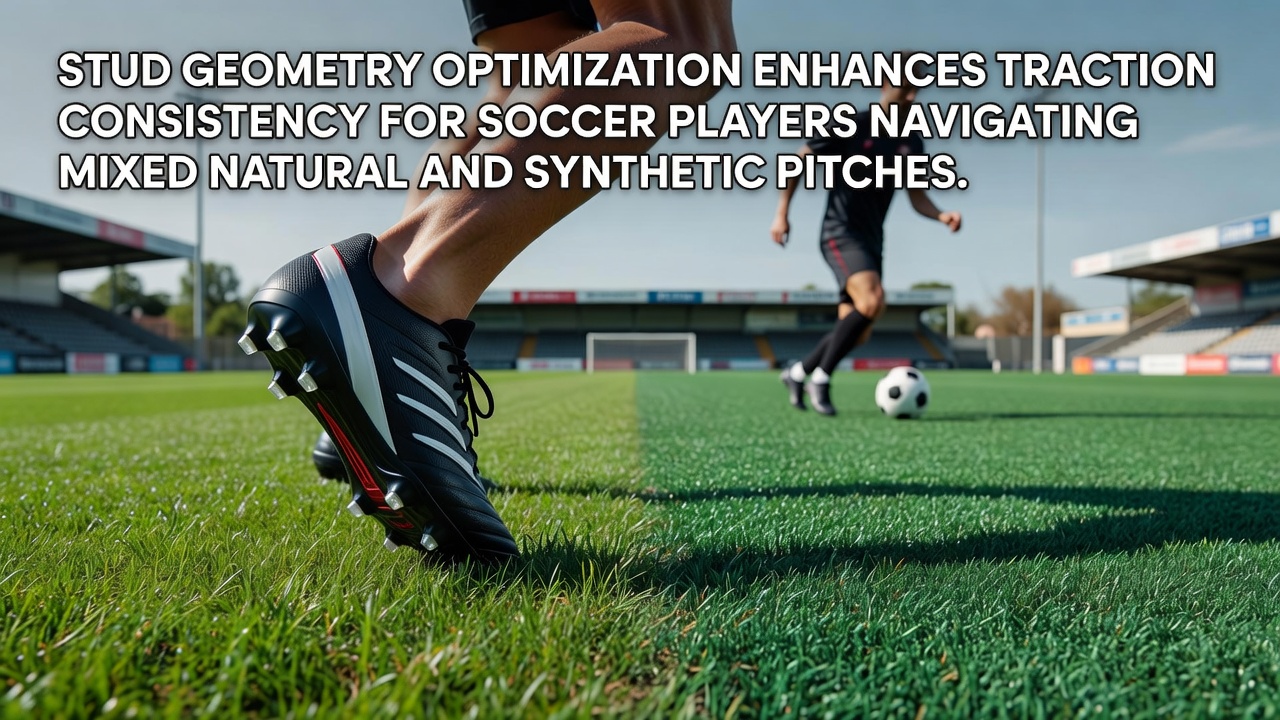
Researchers in sports engineering have examined how adjustments to stud shapes, lengths, and spacing patterns affect player movement across fields that combine natural grass with synthetic turf sections, and studies continue to refine these elements for better stability during rapid direction changes.
Understanding Surface Variations in Modern Soccer Fields
Modern pitches often feature hybrid constructions where natural grass meets synthetic fibers, creating zones with differing friction coefficients and compressibility, while players must maintain consistent footing without abrupt shifts in grip that could lead to slips or excessive torque on joints. Data from field testing shows these transitions occur frequently in professional venues, and equipment designers respond by modeling stud interactions with both surface types under simulated loads.
Core Principles of Stud Geometry
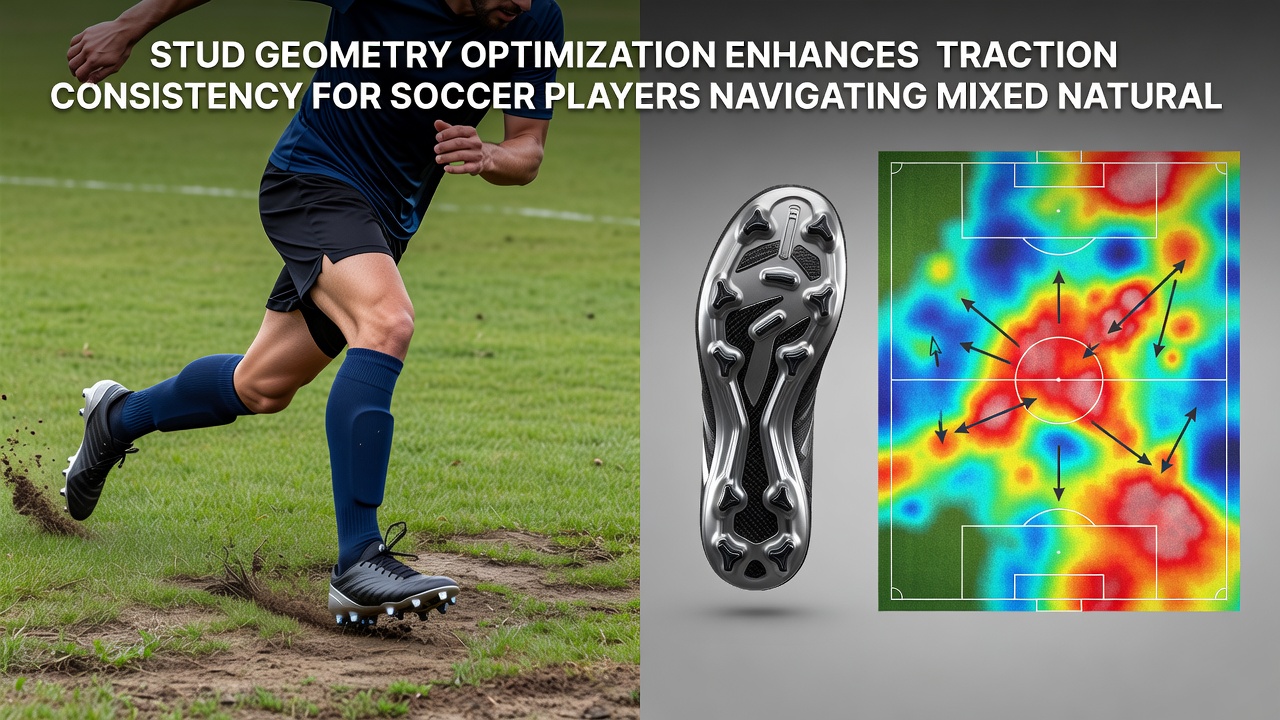
Stud geometry refers to the three-dimensional arrangement of protrusions on the outsole, including conical, blade, and cylindrical forms arranged in specific clusters, and optimization involves balancing penetration depth on softer natural areas with surface area contact on firmer synthetics. Engineers use finite element analysis to predict how each configuration distributes force during acceleration, cutting maneuvers, and deceleration phases.
One research team at an Australian sports institute documented that conical studs with tapered tips reduce soil displacement on natural grass while maintaining edge grip on synthetic blades, whereas wider blade profiles increase lateral resistance but risk over-engagement when crossing material boundaries.
Optimization Methods and Testing Protocols
Teams apply iterative prototyping combined with high-speed motion capture and force plate measurements to refine stud layouts, and these protocols track metrics such as peak shear force, rotational torque, and slip distance across controlled transitions between turf types. Results indicate that asymmetric spacing, with denser patterns toward the forefoot, supports forward propulsion while allowing controlled pivots in the midfoot region.
Key Parameters in Design Refinement
- Stud length variation from 8 to 15 millimeters to accommodate grass cushioning versus synthetic hardness
- Angular orientation of blades to align with common cutting vectors observed in match footage
- Material hardness gradients that flex slightly on impact yet retain shape under sustained pressure
What's interesting is how computational fluid dynamics models, originally developed for other industries, now simulate turf interaction by treating grass blades and synthetic fibers as deformable media, and this approach has accelerated design cycles significantly since early 2020s implementations.
Performance Outcomes on Mixed Pitches
Players navigating these hybrid surfaces report fewer instances of unexpected slip during matches played on venues with partial synthetic reinforcement, and biomechanical studies link optimized stud patterns to reduced loading rates at the ankle and knee. Figures from a 2025 multi-site trial coordinated across European and North American facilities reveal measurable decreases in traction variability when comparing baseline and refined geometries under identical movement sequences.
But here's the thing: consistency emerges not from maximizing grip everywhere but from matching engagement characteristics so the transition zones produce predictable responses, and this principle guides current outsole development at several major manufacturers.
Developments Entering Mid-2026
As of July 2026, several top clubs have integrated sensor-equipped prototypes into training regimens to gather real-time data on stud-surface interactions during live sessions, and preliminary outputs suggest further refinements in stud edge radii could enhance durability without compromising the targeted traction profile. Regulatory bodies such as those overseeing international match standards continue to evaluate these innovations against safety benchmarks established through longitudinal injury surveillance programs.
One study from a Canadian research consortium examined how optimized geometries performed across temperature ranges typical of summer tournaments, and findings showed stable traction coefficients even when synthetic sections heated under direct sunlight while adjacent natural grass retained moisture.
Conclusion
Continued refinement of stud geometry addresses the demands of contemporary playing surfaces by delivering more uniform traction responses, and ongoing collaboration between academic researchers, equipment producers, and governing organizations supports incremental gains in player consistency across mixed natural and synthetic environments. Data collection efforts expand each season, providing additional parameters for next-generation designs.