Flex Profiling Methods in Hybrid Athletic Footwear Optimize Energy Transfer Across Quick Activity Changes
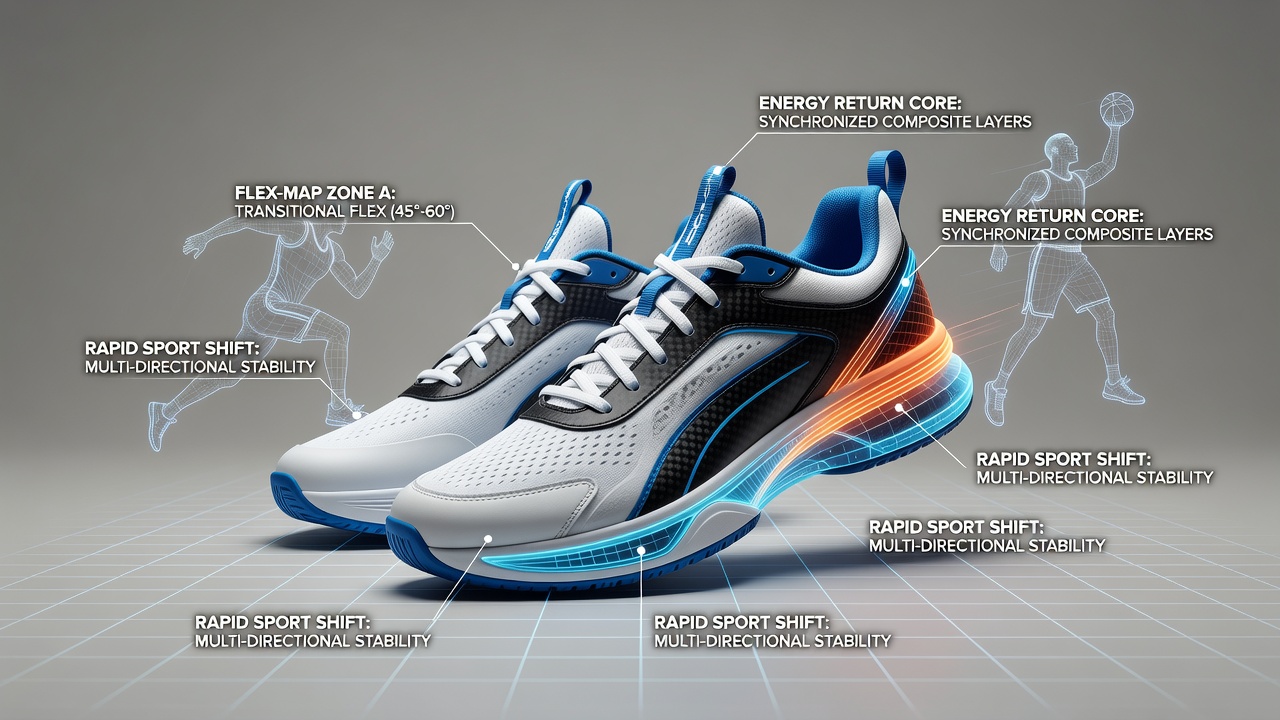
Shaft flex mapping techniques analyze the bending characteristics of structural elements within multi-sport footwear to coordinate energy return when athletes switch between activities such as running, court movements, and cycling. These methods rely on precise measurements of material deformation under load, which allows designers to align flex zones with specific biomechanical demands during rapid transitions.
Core Principles Behind Flex Mapping
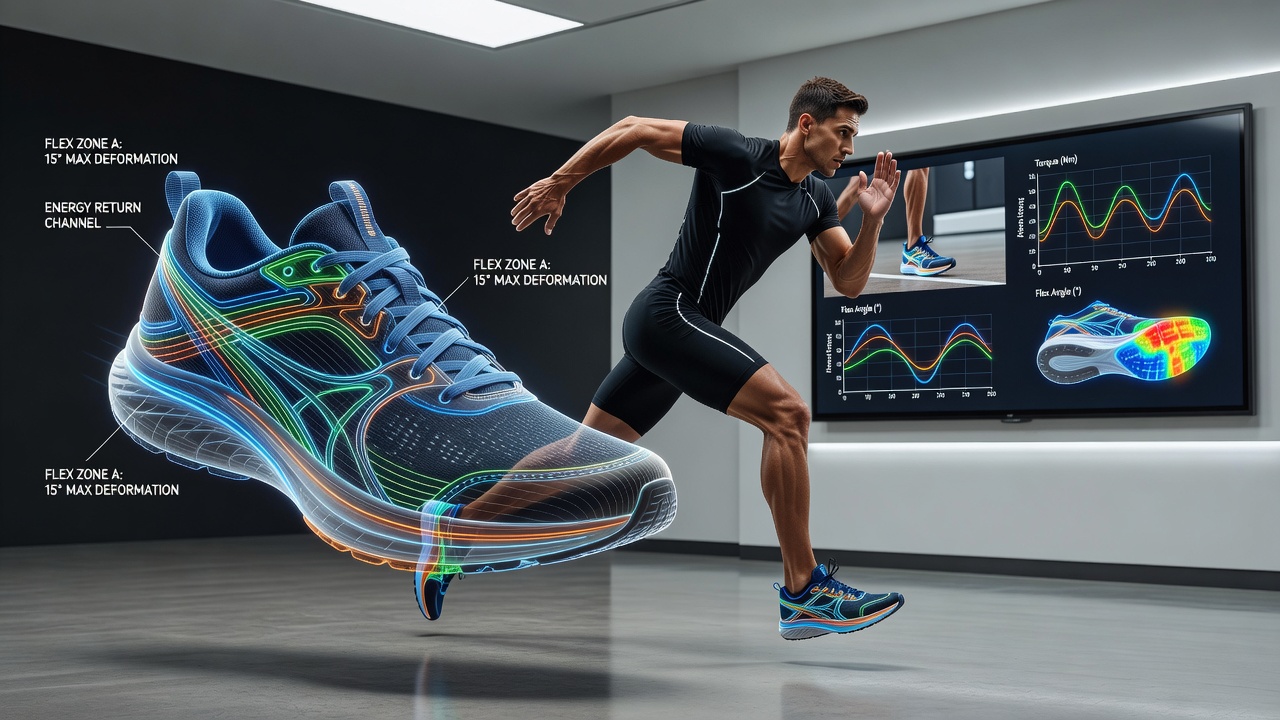
Engineers employ strain gauge arrays and high-speed motion capture systems to record how midsole shafts respond to forces from multiple directions, and data from these tests creates detailed profiles that highlight areas of high and low flexibility. Researchers at institutions including the Canadian Sport Institute Pacific have documented how such profiles help maintain consistent propulsion when an athlete moves from a soft trail surface to a rigid indoor court within seconds. The process often incorporates finite element analysis software to simulate thousands of loading cycles, which reveals patterns that traditional static testing overlooks.
Mapping begins with baseline calibration of shaft materials such as carbon fiber composites or thermoplastic elastomers, after which dynamic trials on instrumented treadmills and force plates capture real-time flex data. Observers note that these datasets typically show distinct bend points near the forefoot and midfoot that correspond to push-off phases across different sports.
Technical Approaches to Measurement
Modern protocols combine laser scanning with pressure-sensitive mats to generate three-dimensional flex maps, while athletes perform transition drills that replicate sport-specific sequences. Studies conducted through the Australian Institute of Sport in 2025 demonstrated that mapping accuracy improves when tests include both straight-line acceleration and lateral cutting movements. Technicians then overlay these results onto digital shoe models to adjust shaft thickness and layering patterns before production prototypes are built.
One notable advancement involves integrating embedded sensors directly into test footwear, which transmit continuous flex readings during extended sessions. This approach yields granular information on how temperature fluctuations and moisture affect shaft performance, factors that become critical during outdoor-to-indoor shifts common in multi-sport events.
Applications in Synchronized Energy Return
Once flex maps are complete, manufacturers tune shaft geometry to store and release energy at timings that match the kinetic chain requirements of successive sports. For instance, a shaft with progressive stiffness from heel to toe can absorb impact forces during a run-to-cycle transition while still providing responsive rebound for quick directional changes on court surfaces. Data collected by the European College of Sport Science indicates that such calibrated designs reduce energy loss at the shoe-ground interface by measurable percentages during repeated activity switches.
June 2026 saw the release of updated testing standards from several international sports engineering groups that emphasize synchronized return metrics across footwear categories. These guidelines encourage the use of combined flex and torsion mapping to address the complex loading patterns athletes encounter in hybrid competitions. Field evaluations continue to validate that shoes incorporating these mapped shafts maintain more uniform energy profiles even after hundreds of rapid transitions.
Material and Design Integration
Design teams select shaft materials based on their elastic modulus values derived from mapping data, which ensures that energy storage occurs in zones that align with joint flexion angles common to multiple disciplines. Layered constructions allow independent tuning of longitudinal and transverse flex, a feature that supports both forward propulsion and lateral stability without compromising either. Industry reports from the International Sports Engineering Association highlight ongoing work to incorporate recycled composites while preserving the precise bend characteristics identified through mapping.
Prototyping workflows now routinely include virtual reality simulations where athletes experience mapped shoe behavior before physical samples are produced. This step reduces iteration cycles and helps confirm that energy return remains synchronized when movement patterns shift abruptly between sports.
Conclusion
Shaft flex mapping continues to evolve as a foundational technique for developing multi-sport footwear that delivers coordinated energy return. Ongoing research and standardized testing protocols support refinements that address the demands of rapid activity transitions across varied environments. As measurement technologies advance, the integration of detailed flex profiles into design processes remains central to performance-oriented footwear development.