Flex Zone Technologies in Hybrid Footwear: Supporting Transitions Between Trail Paths and Court Surfaces
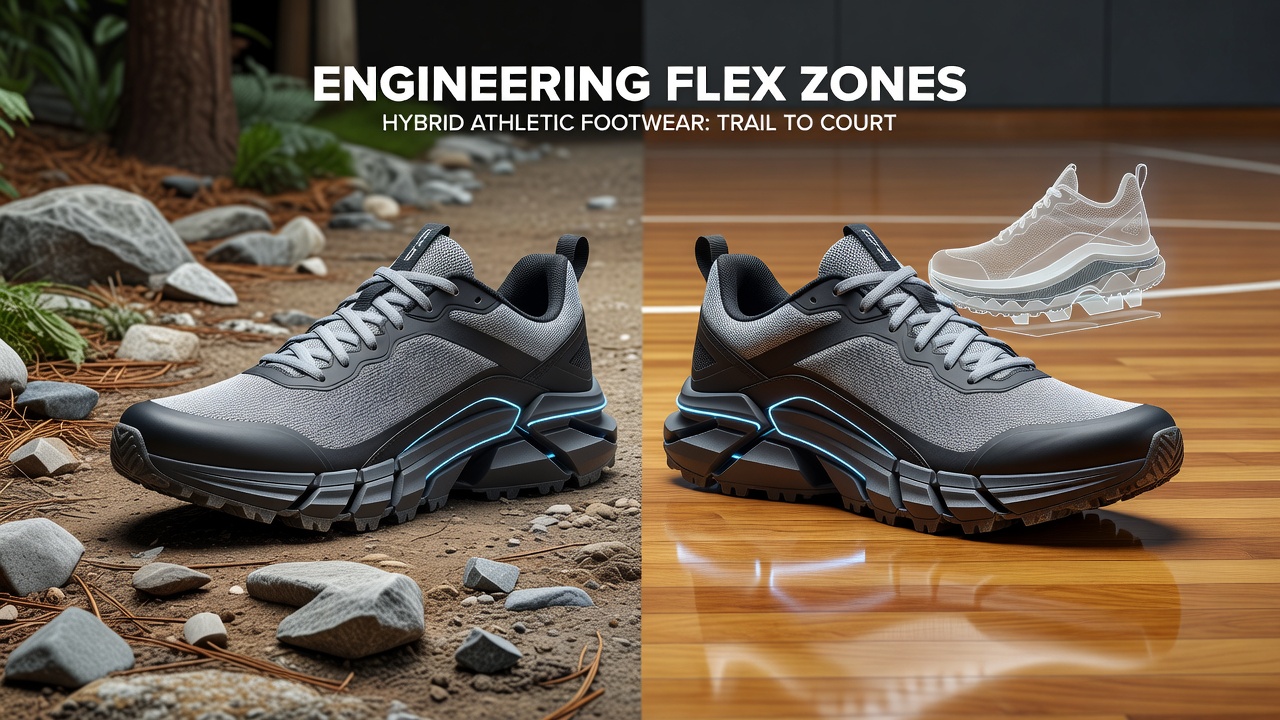
Engineers design flex zones in hybrid athletic footwear through targeted segmentation of the midsole and outsole layers, allowing the shoe to bend along specific axes during trail runs while maintaining torsional rigidity on indoor court surfaces, and these zones typically incorporate variable durometer foams combined with strategic groove patterns that respond differently based on applied force angles.
Core Engineering Principles Behind Flex Zones
Design teams segment the forefoot and midfoot regions with independent flex channels that permit sagittal plane movement for uneven trail terrain yet restrict frontal plane twisting during lateral court cuts, and this segmentation relies on finite element analysis to model stress distribution across materials such as ethylene-vinyl acetate blends and thermoplastic elastomers. Researchers map pressure points from athlete gait data collected on both natural dirt paths and polished hardwood floors, then calibrate the depth and spacing of flex grooves to achieve a balance where the shoe yields under vertical loads exceeding 1.5 times body weight but stiffens under shear forces typical of pivots. Observers note that early prototypes from the mid-2010s often failed when grooves propagated cracks under repeated multi-surface use, prompting the adoption of reinforced bridging elements that connect flex channels without compromising bend radius.
Material Selection and Structural Integration
Manufacturers embed carbon fiber plates or nylon shanks within the flex zone boundaries to control energy return, ensuring that trail cushioning does not translate into instability when the wearer shifts to court acceleration phases, and these reinforcements sit above or below primary foam layers depending on whether the design prioritizes ground feel or impact dispersion. Data from biomechanical labs indicate that hybrid constructions using dual-density polyurethane in the heel-to-midfoot transition reduce peak plantar pressure by 12 to 18 percent during surface changes compared with single-density models. Those who study footwear durability report that bonding techniques such as direct injection molding create seamless interfaces between rigid and compliant zones, preventing delamination when temperature fluctuations occur between outdoor trails and climate-controlled indoor environments.
Performance Testing Across Surfaces
Testing protocols cycle shoes through alternating trail simulation on inclined treadmills with variable aggregate and court simulation on force plates that replicate friction coefficients between 0.6 and 0.9, and results guide iterative adjustments to flex zone geometry until the shoe maintains consistent stride length and ground contact time across both conditions. In June 2026 several brands expanded their validation programs to include real-time sensor arrays embedded in test footwear, capturing torque values at the midfoot during documented athlete transitions from gravel paths to maple courts. Studies conducted at Canadian research facilities have quantified how flex zone depth influences fatigue resistance, showing that channels measuring 4 to 6 millimeters provide optimal compliance on trails without exceeding allowable shear deformation on slick indoor floors.
Biomechanical Considerations and Athlete Adaptation
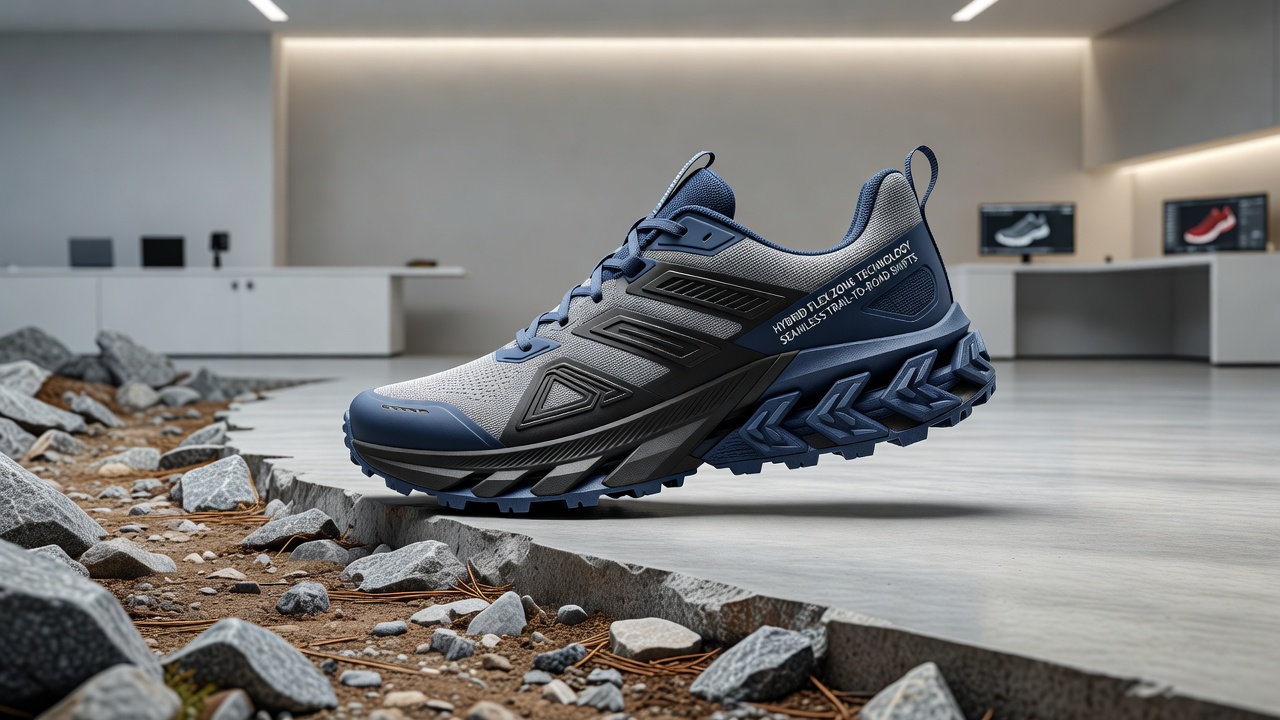
Athletes adapt their movement patterns when wearing hybrid shoes because the flex zones alter proprioceptive feedback at the metatarsal heads during each surface change, and gait analysis reveals reduced braking forces when the shoe permits natural toe-off flexion on trails followed by controlled roll-through on courts. Engineers collaborate with sports medicine teams to incorporate asymmetric flex patterns that accommodate individual pronation profiles, ensuring that left and right shoes receive tailored groove placements based on three-dimensional foot scans. Evidence from university-led projects in Australia demonstrates that such customization lowers the incidence of midfoot strain by aligning the shoe's neutral bending axis with the wearer's subtalar joint motion across varied surfaces.
Manufacturing Challenges and Scaling Solutions
Production lines must maintain tight tolerances when molding multiple flex zones into a single midsole unit, since even minor variations in groove angle can shift the transition point between compliant and rigid behavior, and automation systems now use laser-guided alignment to position internal shanks before foam injection. Supply chain reports highlight the use of regionally sourced elastomers in European facilities to meet performance specifications while addressing sustainability targets set by industry groups. Those tracking production metrics note that yield rates for hybrid models improved after manufacturers introduced post-molding flex testing stations that simulate both trail compression cycles and court shear loads before final assembly.
Future Developments Anticipated by 2026
By mid-2026 computational modeling combined with machine learning algorithms is expected to accelerate the refinement of adaptive flex zones that respond to surface detection through embedded pressure-sensitive filaments, allowing the shoe to modulate stiffness in real time. Academic partnerships continue to publish findings on multi-material additive manufacturing techniques that print flex zones with gradient properties, eliminating the need for separate component bonding. Industry data compiled by international trade organizations indicate steady growth in hybrid footwear categories as more athletes participate in cross-surface training regimens that alternate between trail and court environments within single sessions.
Conclusion
Flex zone engineering in hybrid athletic footwear represents a convergence of materials science, biomechanical data, and precision manufacturing that enables reliable performance during shifts between trail paths and indoor court surfaces. Continued refinement through laboratory validation and field testing supports consistent outcomes across diverse athletic applications while meeting durability requirements under repeated multi-surface exposure.