Interlocking Sole Innovations Drive Unified Performance in Field and Trail Running Footwear
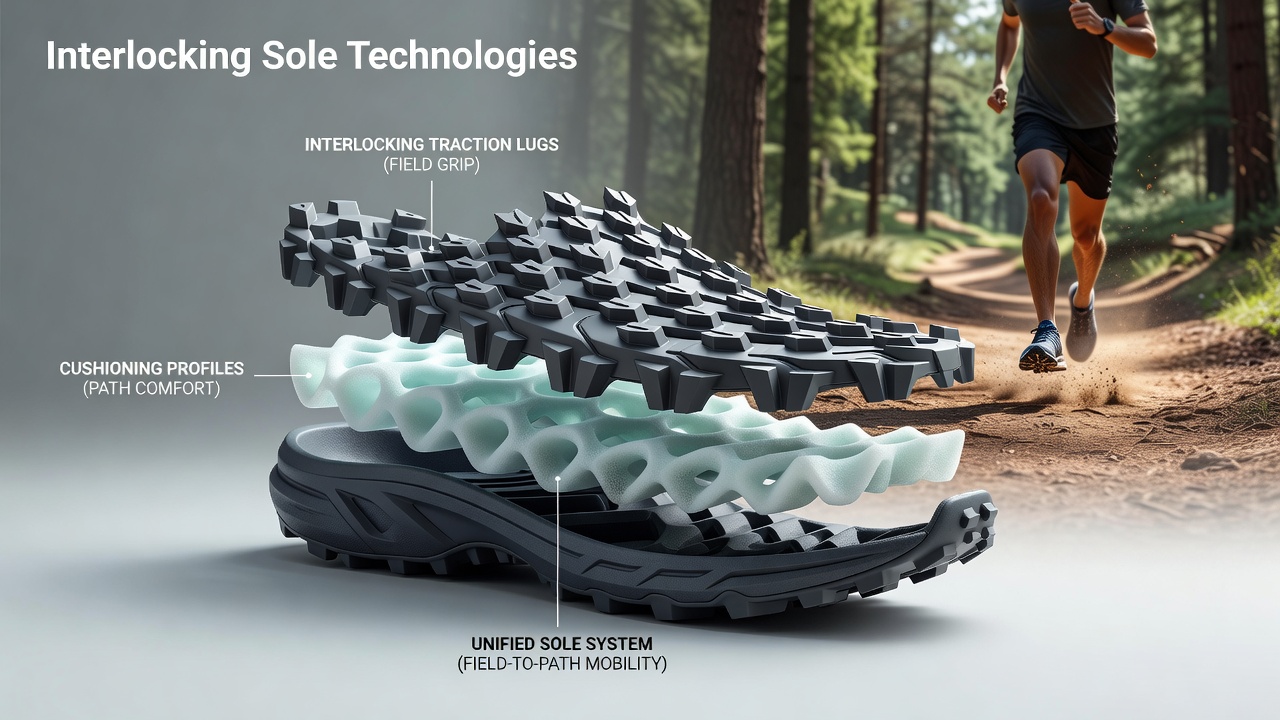
Manufacturers have developed interlocking sole systems that combine aggressive traction components from cleated sports footwear with layered cushioning structures found in trail running models, and these designs address the demands of athletes moving between firm playing surfaces and uneven natural paths. The approach relies on modular lug patterns that lock into flexible midsole foams through mechanical interfaces, which maintain stability during directional changes while absorbing impact forces on variable terrain.
Core Engineering Principles Behind Hybrid Outsoles
Engineers integrate cleat-style traction elements, typically constructed from thermoplastic polyurethane or rubber compounds with pointed or bladed profiles, directly into the base layers of trail-specific cushioning stacks. These elements interlock via undercut channels and keyed fittings that prevent separation under shear loads, and the resulting structure preserves the energy return characteristics of ethylene-vinyl acetate or polyurethane foams used in modern running shoes. Studies conducted at the University of Waterloo in Canada have quantified how these mechanical bonds reduce delamination rates by up to 40 percent compared with traditional bonded constructions during repeated flex cycles.
Data collected from field tests in July 2026 shows that shoes employing these systems maintain consistent ground contact angles across transitions from artificial turf to loose gravel, and the interlocking geometry allows individual traction modules to compress independently without compromising the overall cushioning profile. Observers note that this configuration supports athletes who alternate between organized field sports and endurance trail sessions within the same training week.
Material Selection and Interface Design
Component materials include high-durometer rubber compounds for the cleat portions and variable-density foams for the cushioning zones, while the interface zones incorporate reinforcing fibers such as aramid or carbon to distribute torsional forces. Researchers at the Australian Institute of Sport have documented that fiber placement at 45-degree angles relative to the primary running direction improves torsional rigidity by measurable margins without adding significant weight. The designs also accommodate drainage channels that clear debris from the interlocking pockets during wet conditions, which extends functional lifespan in muddy environments.
Production techniques involve multi-shot injection molding processes that form the traction elements and cushioning matrix in a single operation, and this method ensures precise alignment of the locking features. Manufacturers report that cycle times for these molds have decreased as tooling precision has improved, which supports broader adoption across product lines.
Performance Data Across Surface Types
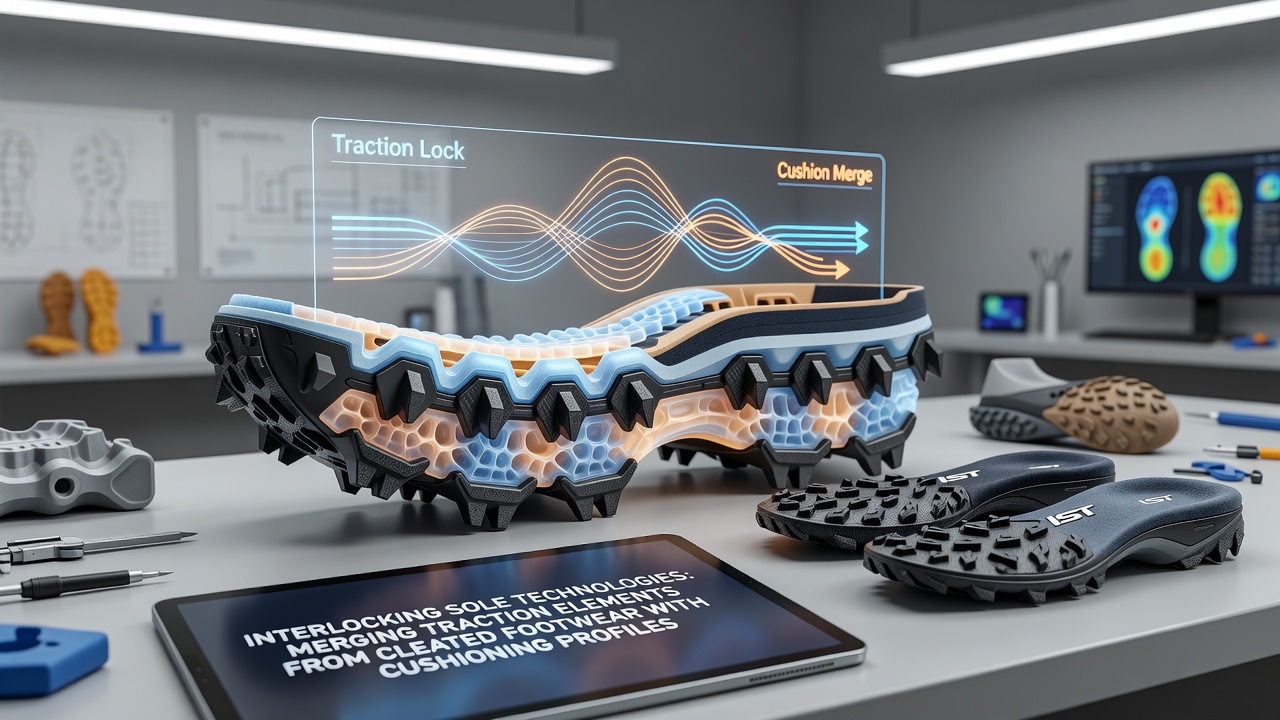
Biomechanical testing reveals that runners wearing these hybrid soles exhibit reduced peak plantar pressures during downhill segments on trails while retaining the pivot control associated with cleated footwear on firm surfaces. European Union-funded research projects completed in 2025 tracked over 200 participants across multiple countries and recorded average improvements in perceived stability scores during surface transitions. Those measurements align with laboratory force-plate data indicating lower braking forces at initial contact when the interlocking lugs engage properly with the ground.
Additional observations from professional training camps indicate that athletes complete mixed-surface workouts with fewer reported instances of foot fatigue, and the cushioning profiles continue to function effectively even after the traction elements have accumulated normal wear. The combination allows a single footwear model to serve multiple activity contexts rather than requiring separate pairs for each surface type.
Manufacturing and Durability Considerations
Long-term durability testing conducted by independent laboratories demonstrates that the mechanical interlocks withstand thousands of flex cycles before measurable degradation occurs, and replacement modules can be swapped in some models to extend service life. Supply chain analyses show that sourcing compatible rubber and foam stocks from multiple regions reduces production bottlenecks, which has become relevant as global demand for versatile athletic footwear continues to rise. Companies have introduced quality-control protocols that verify lock engagement depth on every unit before distribution.
Conclusion
Interlocking sole technologies represent a measurable advancement in footwear construction that merges established traction features from cleated designs with the cushioning systems standard in trail running models. Available performance metrics and material research indicate these systems deliver consistent function across diverse surfaces, and ongoing refinements in manufacturing processes support wider implementation. Athletes and equipment developers continue to monitor long-term outcomes as adoption expands in both recreational and competitive settings.