Lug Patterns in Mountain Running Shoes: Enhancing Foot Stability on Uneven Trails
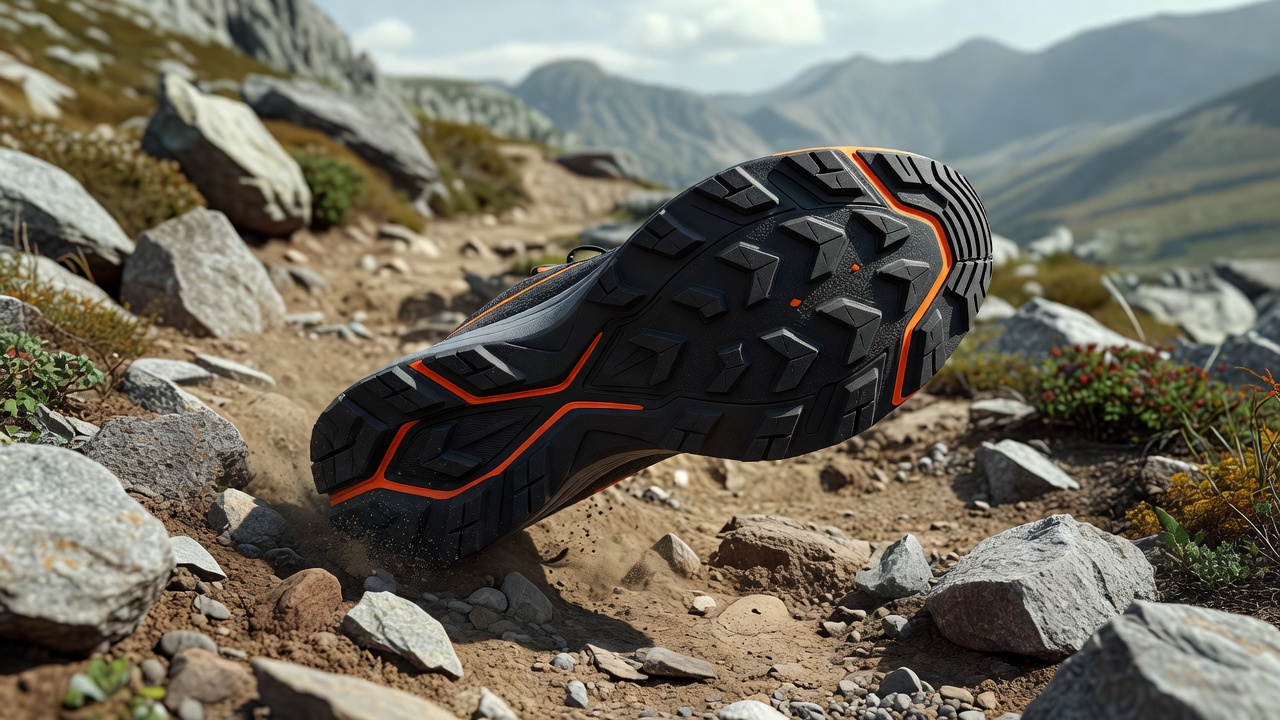
Outsole lug patterns play a central role in how mountain running shoes manage foot placement on rocky, root-covered, and sloped surfaces that define uneven trails, with designers focusing on geometry, spacing, and orientation to improve traction without sacrificing flexibility. Research from biomechanics labs indicates that specific arrangements of lugs help distribute pressure across the foot while reducing slippage on loose dirt or wet rock, and data from trail studies show measurable improvements in stride consistency when runners use shoes with optimized configurations.
Core Elements of Lug Design
Lug patterns consist of raised rubber elements molded into the outsole, and their shapes range from directional chevrons that channel debris away from the contact area to multi-directional blocks that provide grip during lateral movements on narrow paths. Engineers adjust lug height, typically between 4 and 8 millimeters for mountain models, along with spacing that prevents mud buildup while maintaining surface area for stability, and studies at institutions such as the University of British Columbia have measured how these variables affect ground reaction forces during downhill sections.
Directional lugs often point forward to aid propulsion on ascents, yet they incorporate side-oriented edges that resist twisting when the foot lands at angles on uneven ground, and manufacturers test these features through repeated trials on simulated trails that replicate root networks and boulder fields common in alpine regions.
Stability Mechanisms on Variable Terrain
Foot placement stability improves when lugs create interlocking contact points that limit micro-slips, which can accumulate into larger balance corrections over long distances, and evidence from motion-capture research demonstrates reduced ankle inversion angles with patterns that feature wider heel lugs for initial impact absorption. On steep grades, siped or segmented lugs flex to conform to surface irregularities, allowing the shoe to maintain a flatter platform relative to the runner's center of mass, whereas rigid patterns may transmit more vibration but offer quicker response on technical terrain.
Observers note that hybrid arrangements combining aggressive forefoot lugs with moderate midfoot zones balance traction needs across different trail sections, and field data collected during summer training periods, including those extending into July 2026 events, confirm that runners experience fewer corrective steps when shoes incorporate these balanced designs.
Regional and Environmental Adaptations
Trail conditions vary widely by geography, so lug patterns often incorporate region-specific modifications such as tighter spacing for dry, dusty paths in arid mountain ranges or deeper, wider channels for frequent rain in temperate zones, and reports from European research networks highlight how these adaptations correlate with lower fatigue markers in prolonged efforts. In North American testing protocols, patterns with reinforced edges around the perimeter help counter the shear forces encountered on switchbacks, while Australian studies on similar footwear emphasize the role of lug overlap in preventing debris trapping during rapid direction changes.
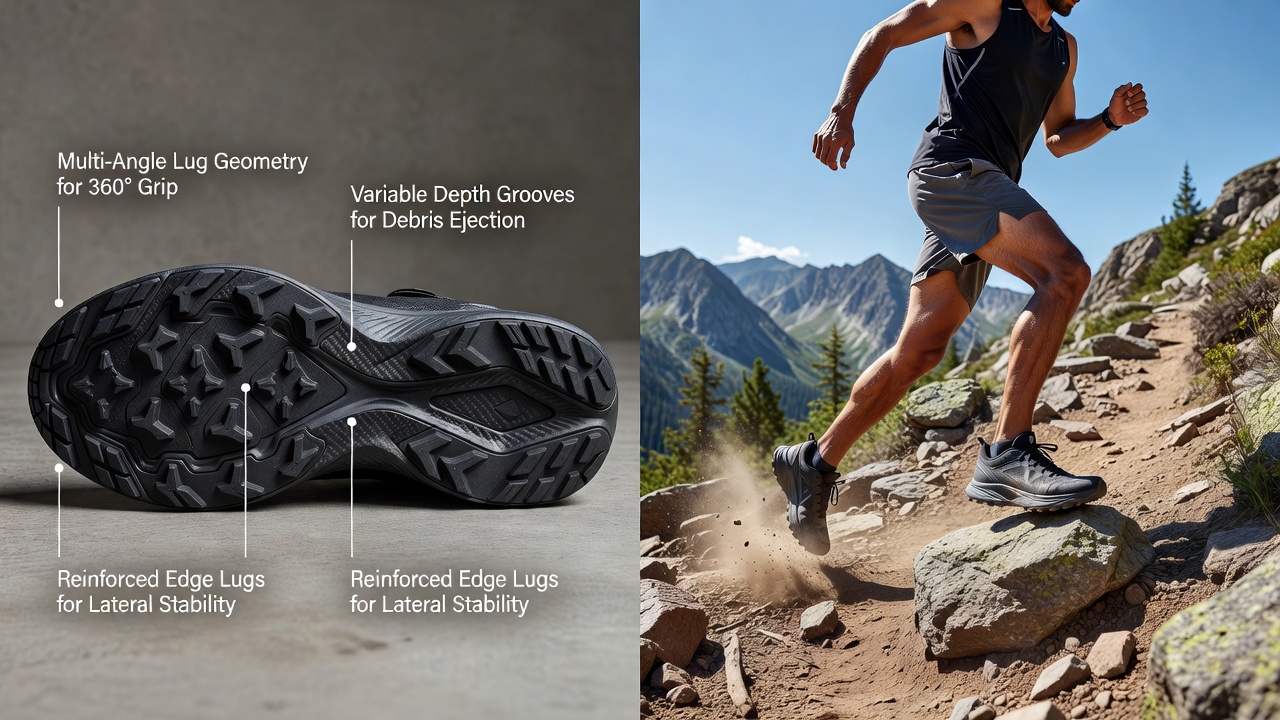
Compounds paired with the patterns, including sticky rubber blends rated between 60 and 75 on the Shore A scale, work alongside geometry to enhance hold, and combined testing shows that pattern density in the forefoot directly influences push-off efficiency on loose gravel without increasing overall shoe weight.
Testing and Performance Data
Standardized lab protocols measure coefficient of friction across multiple surface types, revealing that certain lug orientations achieve up to 15 percent higher grip values on angled inclines compared with uniform block designs, according to findings shared by international sports engineering groups. Real-world validation occurs through timed trail segments where athletes complete loops with varied footwear, and aggregated results indicate consistent reductions in ground contact time variability when patterns align with typical foot strike patterns observed in mountain running populations.
Those who analyze wear patterns after extended use find that lugs positioned to handle braking forces in the heel wear more evenly when the overall arrangement includes transitional zones rather than abrupt changes in height or angle, and this even distribution supports sustained stability throughout an outing.
Conclusion
Outsole lug patterns continue to evolve through iterative design informed by biomechanical measurements and field observations, delivering targeted improvements in foot placement stability for runners on uneven mountain trails, and ongoing work at diverse research centers worldwide refines these elements to match shifting trail demands while preserving durability across seasons.