Modular Insoles with Pressure Mapping Overlays Guide Force Redistribution Across Cleats, Court Shoes, and Trail Runners
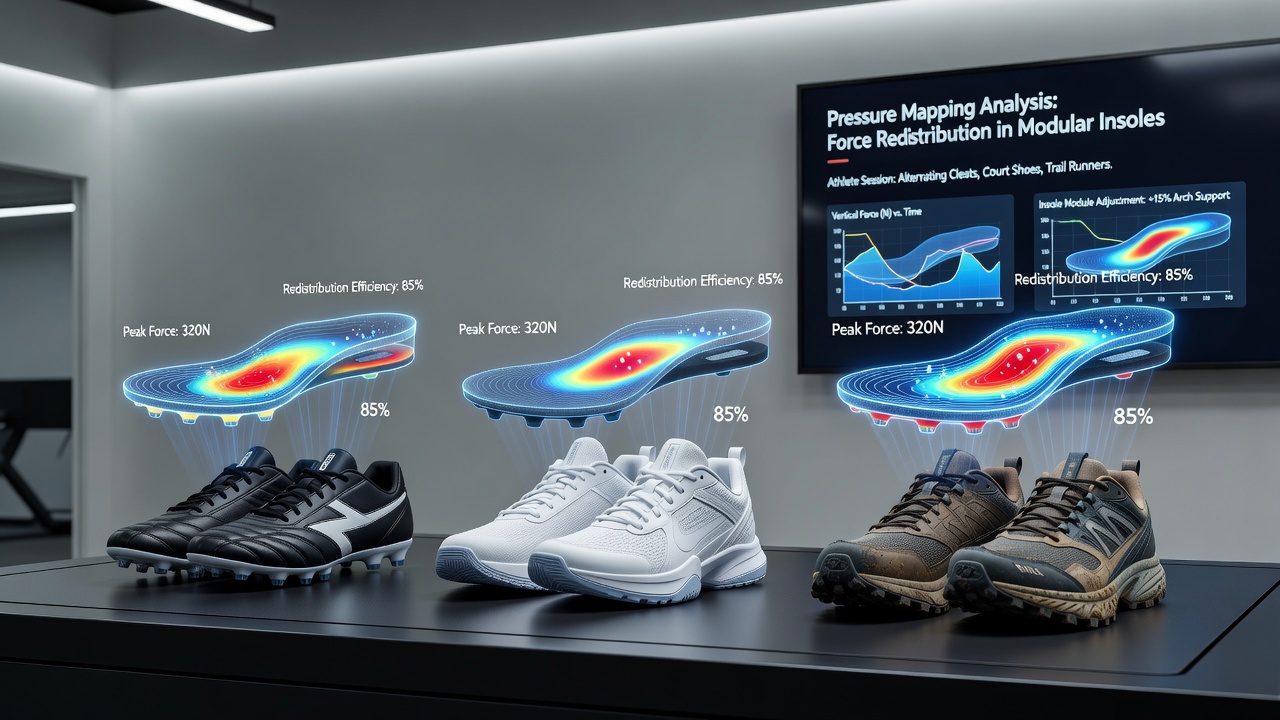
Pressure mapping overlays embedded in modular insoles capture real-time data on plantar pressure during rapid transitions between footwear types, and these systems adjust force paths when athletes move from cleated boots on grass to court shoes on hardwood and then to trail runners on uneven surfaces within the same training day. Researchers at institutions across multiple continents have documented how these overlays identify high-load zones that shift dramatically with each shoe change, allowing inserts to redistribute pressure through adjustable zones rather than letting it concentrate under the heel or forefoot.
Mechanics of Pressure Mapping in Modular Designs
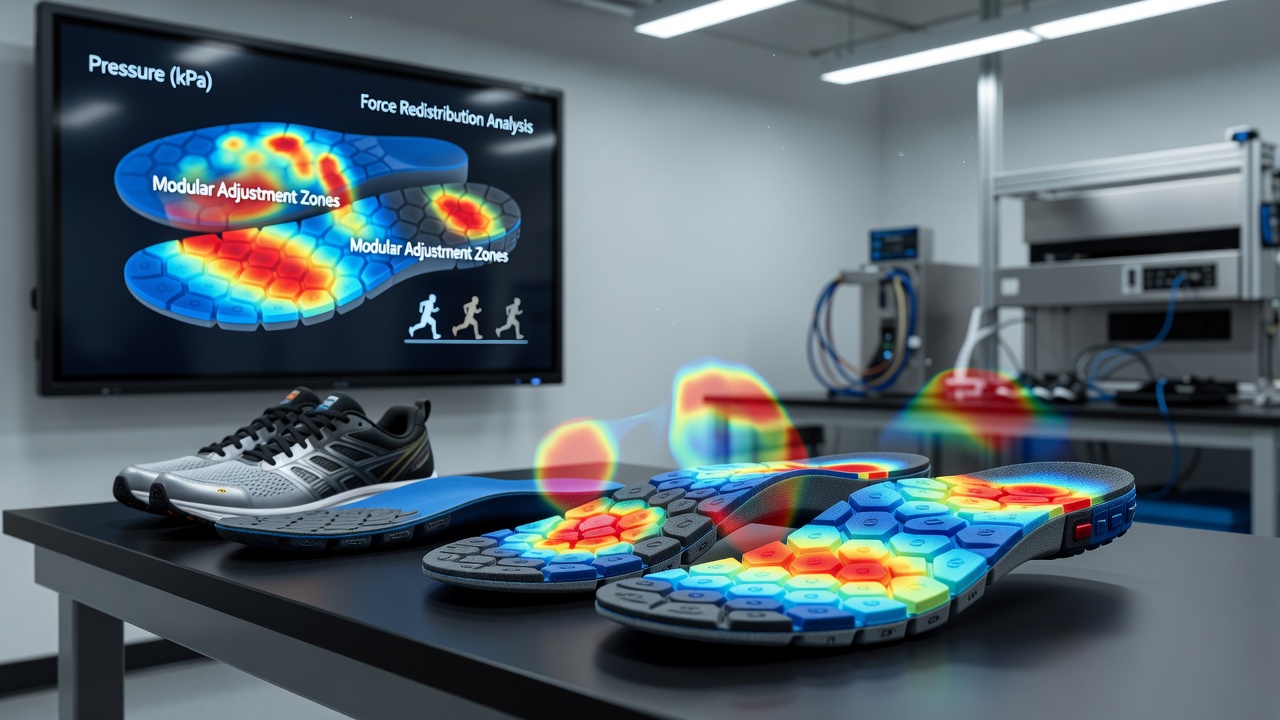
Modular insoles consist of a base layer paired with removable overlays that contain sensor grids, and these grids record pressure in newtons per square centimeter across dozens of discrete points. When an athlete switches from cleats, which feature rigid studs that channel impact through specific sole positions, to court shoes with flatter, more flexible outsoles, the overlay detects the altered contact pattern and signals where additional cushioning or firmer support should engage. Data from field studies conducted by the Australian Institute of Sport indicate that forefoot pressure can increase by up to 35 percent during lateral cuts in court shoes compared with forward strides in cleats, prompting the overlay to activate medial arch reinforcement automatically.
Handling Same-Day Footwear Transitions
Athletes participating in multi-sport sessions often complete morning drills in cleats on turf, move to indoor court work at midday, and finish with trail runs in the afternoon, and each change alters ground reaction forces in measurable ways. Pressure mapping overlays track these variations without requiring athletes to stop for manual adjustments, since the modular segments can be swapped between sessions while the sensor data remains stored for post-activity review. Observers note that trail runners introduce greater variability due to rockered soles and variable terrain angles, which can shift peak pressure from the metatarsal heads toward the midfoot, a pattern the overlays flag so that firmer heel cups can be inserted before the next outing.
Regional Research and Technology Integration
Studies coordinated through the German Sport University Cologne have examined how pressure redistribution affects injury markers when athletes alternate surfaces rapidly, and findings show reduced peak tibial loading when overlays guide force toward the lateral midfoot during court-to-trail switches. In Canada, work at the University of Calgary has focused on youth athletes who train across multiple disciplines on single days, revealing that modular systems with mapping overlays maintain consistent force distribution even as fatigue alters running mechanics later in the session. These approaches rely on Bluetooth-linked apps that display color-coded maps after each segment, helping coaches decide whether to add or remove specific modular wedges before the next footwear change.
Practical Implementation During July 2026 Schedules
Training calendars for July 2026 already incorporate same-day multi-surface blocks at many collegiate and club programs, and equipment managers have begun stocking modular insole kits calibrated for the specific pressure profiles of cleats, court shoes, and trail runners. The overlays log cumulative load data across an entire day, allowing later analysis of how total force exposure compares when athletes remain in one shoe type versus rotating through three. Technicians calibrate the sensor thresholds according to individual gait scans collected at the start of each week, ensuring redistribution zones activate at the correct pressure thresholds for each athlete's foot strike pattern.
Conclusion
Pressure mapping overlays within modular insoles provide measurable guidance for force redistribution when athletes rotate through cleats, court shoes, and trail runners in condensed daily schedules, and ongoing data collection from multiple research centers continues to refine how these systems respond to the distinct loading demands of each footwear category. The combination of sensor feedback and interchangeable components supports consistent pressure management without interrupting training flow.