Polymer Blend Dynamics Supporting Fitness Mat Stability on Varied Surfaces During Intense Interval Training
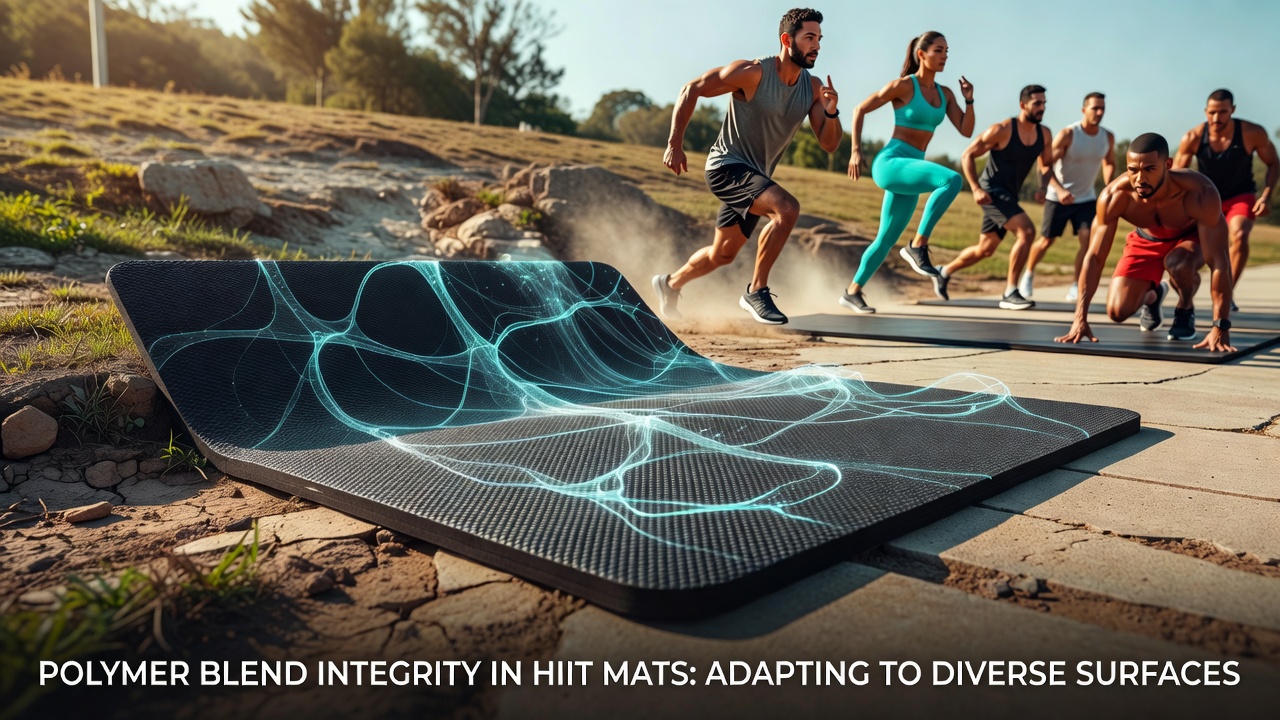
Polymer blends in fitness mats combine materials such as ethylene vinyl acetate with natural rubber and thermoplastic polyurethane to handle repeated high-impact forces that occur during interval sessions, and these combinations allow the mats to retain shape while users perform rapid movements on surfaces ranging from polished concrete to carpeted gym floors. Research indicates that the specific ratios in these blends determine how well a mat resists permanent deformation when subjected to the shear stresses and vertical loads typical of burpees, jump squats, and mountain climbers.
Material Composition and Load Distribution
Manufacturers adjust the molecular weight and crosslinking density within polymer mixtures so that energy from each foot strike dissipates evenly rather than concentrating at any single point, which reduces the risk of surface cracking or edge curling even after hundreds of repetitions. Data from mechanical testing laboratories show that mats containing optimized EVA-rubber blends maintain over 90 percent of original thickness after simulated 45-minute HIIT protocols conducted at 25 degrees Celsius on both hardwood and rubberized subfloors.
Performance Across Different Training Environments
Concrete surfaces transmit vibrations more readily than wooden sprung floors, so polymer formulations often incorporate higher percentages of elastomeric components to absorb those frequencies without transmitting them back to the user’s joints. On carpeted areas the same blend must resist abrasion from fiber friction while still providing enough grip to prevent mat migration during lateral lunges and quick direction changes. Observers note that temperature fluctuations between 18 and 30 degrees Celsius further influence viscoelastic behavior, prompting some producers to include additives that stabilize performance across this range.
Stress Response Mechanisms
During high-intensity intervals the mat experiences cyclic compression followed by rapid recovery, and the polymer network must return to its original configuration within milliseconds to avoid bottoming out on the next repetition. Studies conducted at the University of British Columbia’s advanced materials facility reveal that blends with balanced crystalline and amorphous regions achieve faster recovery times while still offering sufficient cushioning. Those same experiments measured coefficient of friction values on both smooth vinyl and textured rubber flooring, confirming that surface texture of the mat itself plays a larger role than the underlying floor once the polymer blend reaches a certain hardness threshold.
Recent Testing Data and Industry Standards
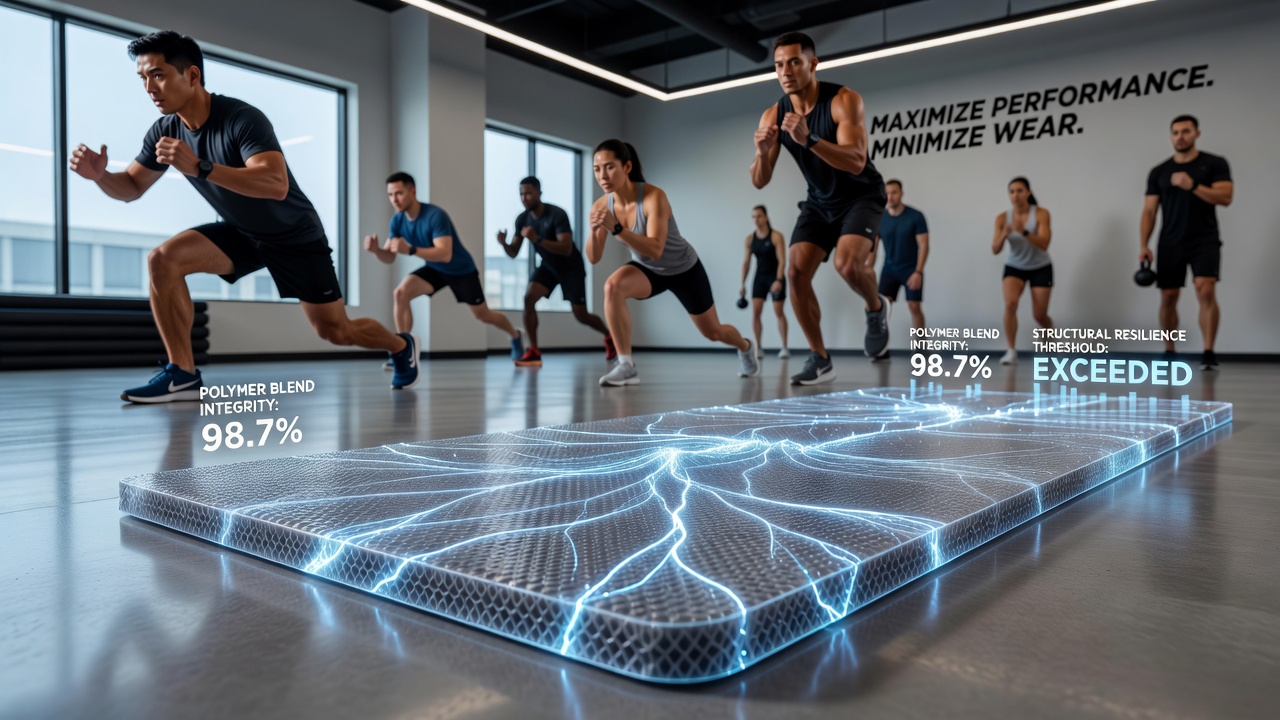
A report issued in July 2026 by the International Materials Research Consortium documented that mats using ternary polymer systems retained structural integrity after 10,000 cycles of simulated HIIT loading on both concrete and interlocking foam tiles, whereas single-polymer controls showed visible compression set after fewer than 6,000 cycles. The findings align with updated testing protocols from the ASTM International committee on athletic equipment surfaces, which now recommend specific hysteresis measurements for mats intended for multi-surface use. European researchers at the Fraunhofer Institute have also published comparative data indicating that certain polyurethane-rubber hybrids maintain consistent energy return across temperature swings common in unconditioned training spaces.
Long-Term Durability Factors
Ultraviolet exposure and cleaning chemicals represent additional variables that can alter polymer chain integrity over months of regular use, yet properly formulated blends incorporate stabilizers that slow oxidative degradation without compromising elasticity. Field observations collected from commercial gyms in Australia demonstrate that mats placed on polished concrete near windows exhibit slower wear when they contain higher antioxidant loadings, while the same formulation performs equivalently on carpeted studio floors where light exposure remains minimal. Cleaning regimens using pH-neutral solutions further extend service life by preventing surface plasticizer migration that would otherwise increase stiffness.
Conclusion
Polymer blend selection directly governs how fitness mats preserve thickness, friction characteristics, and recovery speed when high-intensity interval sessions occur on diverse surfaces, and ongoing laboratory and field measurements continue to refine the ratios that deliver consistent performance across concrete, wood, carpet, and composite flooring. Continued collaboration between materials scientists and equipment standards organizations supports incremental improvements that keep pace with evolving training protocols.