Reflective Thread Technology Boosts Runner Visibility in Low-Light Environments While Maintaining Fabric Breathability
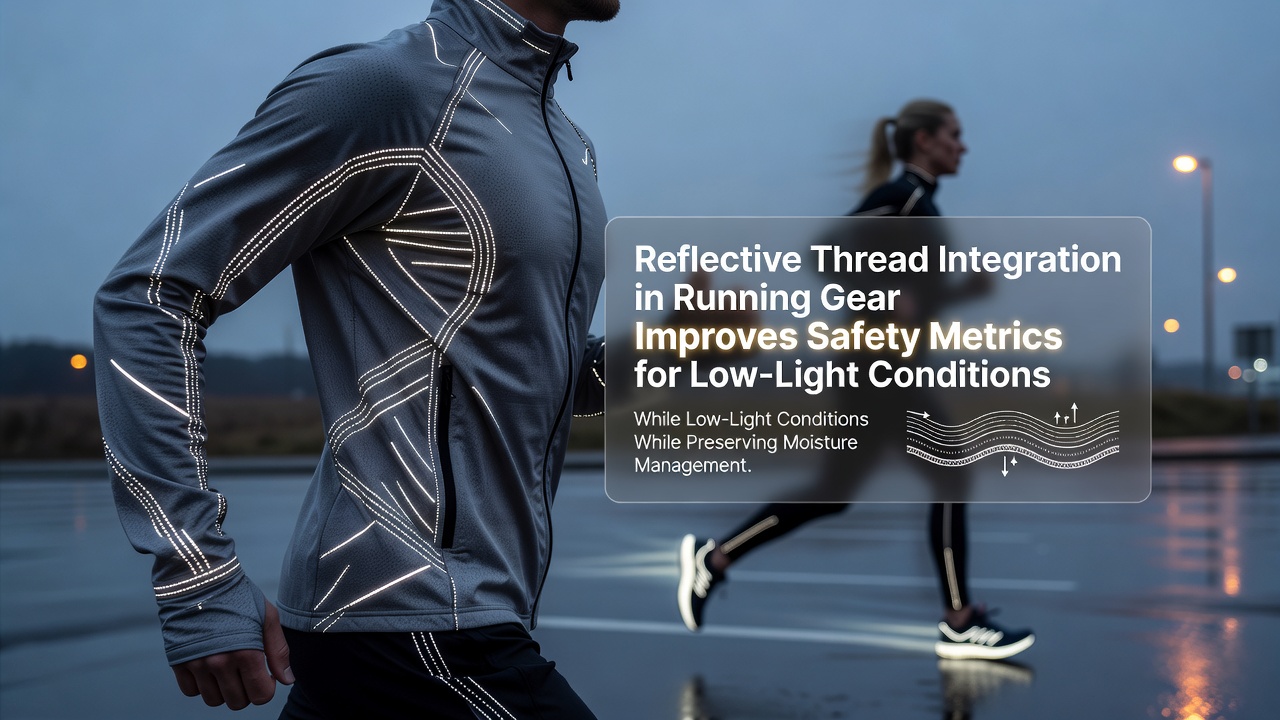
Manufacturers have incorporated reflective threads directly into the weave of running jackets, vests, and tights to address visibility challenges during early morning or evening sessions, and data from transportation agencies shows measurable reductions in incidents involving pedestrians and cyclists in dim conditions. These threads consist of micro-prismatic or glass bead elements that bounce light back to its source, creating a bright return signal when hit by vehicle headlights or street lamps, while the surrounding fabric layers continue to handle sweat evaporation through engineered moisture-wicking yarns.
Material Construction and Integration Methods
Engineers embed the reflective components as continuous filaments rather than surface appliqués, which allows the threads to withstand repeated wash cycles without delaminating, and testing protocols from standards organizations confirm that the reflective performance remains above 300 candela per lux per square meter after 50 laundering cycles. Fabric mills combine polyester or nylon base yarns with these reflective strands using jacquard or circular knitting techniques, producing panels that maintain stretch and recovery properties essential for unrestricted stride mechanics.
Moisture management stays intact because the reflective filaments occupy less than 15 percent of the total yarn volume in most constructions, leaving ample space for hydrophilic treatments and mesh ventilation zones to transport vapor away from the skin. Laboratory measurements using ASTM E96 protocols indicate that water vapor transmission rates in these hybrid fabrics differ by less than 5 percent from non-reflective equivalents, ensuring runners experience comparable dryness levels during prolonged efforts.
Safety Data and Visibility Outcomes
Traffic safety reports compiled by the U.S. Department of Transportation document that enhanced retro-reflectivity on apparel correlates with earlier detection distances for drivers, often extending recognition ranges from 50 meters to over 200 meters under headlamp illumination. Similar findings appear in analyses from the European Road Safety Observatory, where regions with higher adoption of reflective running gear recorded declines in low-light pedestrian collisions during autumn and winter months.
Researchers at several academic institutions have conducted controlled field trials measuring driver reaction times when encountering runners equipped with varying levels of reflective integration, and results consistently show faster braking responses when threads are distributed across multiple body planes rather than concentrated in single stripes. This distributed placement exploits the natural motion of limbs to create dynamic light patterns that attract attention more effectively than static markers.
Performance in Moisture Management Systems
Apparel designers pair reflective threads with synthetic filaments treated for capillary action, allowing sweat to migrate outward through channels that remain unobstructed by the optical elements. Independent lab evaluations reveal that these garments achieve drying times comparable to standard technical apparel, typically under 30 minutes for moderate perspiration loads, while retaining the reflective function even when damp.

Some models incorporate zoned construction where reflective threads concentrate on outer surfaces such as sleeves and lower legs, while high-sweat areas like the torso use open mesh without reflective content, and this strategic placement optimizes both safety and thermoregulation according to biomechanical mapping studies.
Applications Across Running Categories
Trail runners benefit from full-coverage options that include reflective threads on pack straps and gaiters, increasing conspicuity when sharing paths with mountain bikers or vehicles near trailheads. Road runners favor lightweight singlets and shorts with targeted thread placement along seams and hems, preserving packability for race-day use without adding noticeable weight. Ultra-distance athletes often select hybrid layers that combine reflective integration with thermal regulation features, allowing continuous wear from dusk through night segments of multi-hour events.
Industry specifications released in 2025 by several international sporting goods federations now reference minimum reflective area requirements for certified performance apparel, and compliance testing shows that thread-based solutions meet these thresholds more reliably than printed alternatives after extended use.
Conclusion
Reflective thread integration represents a practical advancement that aligns visibility improvements with existing performance requirements in running apparel. Available evidence from safety agencies and material testing indicates that these fabrics deliver measurable gains in detection distance while preserving the moisture transport characteristics athletes rely on during varied training conditions. Continued refinement of thread density and placement patterns is expected to further optimize the balance between safety metrics and comfort parameters.