Reinforcing Agility: Composite Materials Strengthen Lateral Support in Basketball Footwear
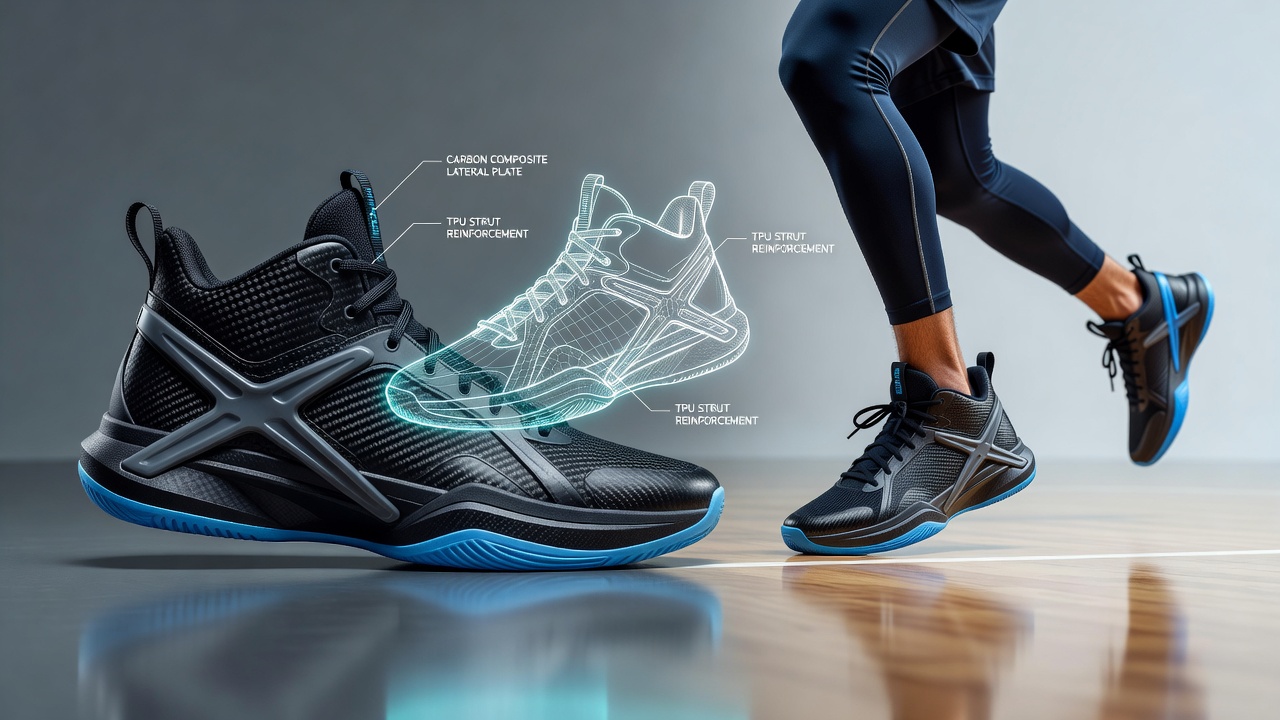
Basketball demands rapid side-to-side movements that place intense stress on the foot and ankle, and manufacturers address these forces through targeted composite reinforcements embedded in footwear construction. These materials, often including carbon fiber plates and engineered polymers, integrate into the midsole and upper to limit excessive twisting while preserving the flexibility needed for explosive cuts and pivots. Research from the Australian Institute of Sport highlights how such reinforcements distribute impact loads more evenly across the shoe structure during high-intensity court actions.
Designers position these composites strategically along the medial and lateral sides of the shoe, creating a supportive framework that resists inversion and eversion. In practice this setup allows players to maintain balance when shifting directions abruptly without compromising the natural roll of the foot through each stride. Engineers calibrate the thickness and orientation of the composite layers based on biomechanical data collected from professional athletes executing crossover dribbles and defensive slides.
Material Composition and Placement Strategies
Carbon fiber composites appear most frequently in the shank area beneath the arch, where they provide a rigid platform that counters the torque generated during lateral accelerations. Manufacturers combine these fibers with thermoplastic polyurethane matrices to achieve a balance between stiffness and lightweight properties, ensuring the shoe does not add unnecessary mass that could slow down quick movements. Additional reinforcements often wrap around the heel counter using woven aramid fabrics that further anchor the foot during planting motions on the court surface.
Placement varies by position and playing style, yet the core principle remains consistent: reinforcements must align with common force vectors encountered in game situations. Studies conducted at the University of Calgary demonstrate that shoes featuring laterally extended composite beams reduce peak ankle inversion angles by measurable margins compared to traditional designs lacking such elements. This reduction correlates with lower strain on surrounding ligaments during repeated directional changes over a full match.
Performance Implications for Agile Court Movements
Players benefit from these enhancements through improved energy return on each push-off, as the composite structures store and release elastic energy efficiently during lateral bounds. The result appears in faster recovery times between movements, allowing athletes to sustain high-intensity efforts across multiple quarters. Data collected during training sessions in June 2026 at several professional development camps showed consistent patterns where reinforced footwear supported tighter turning radii without slippage at the outsole interface.
What's interesting here involves the interaction between the upper materials and the composite chassis, since breathable mesh panels integrate directly with the reinforced zones to prevent any compromise in fit during dynamic activity. Observers note that this integration minimizes internal foot movement within the shoe, which in turn preserves the intended alignment of the reinforcement elements throughout a game. Those who've analyzed force plate readings confirm that such stability translates into more predictable ground reaction forces when athletes execute defensive closeouts or offensive drives.
Testing Protocols and Validation Methods
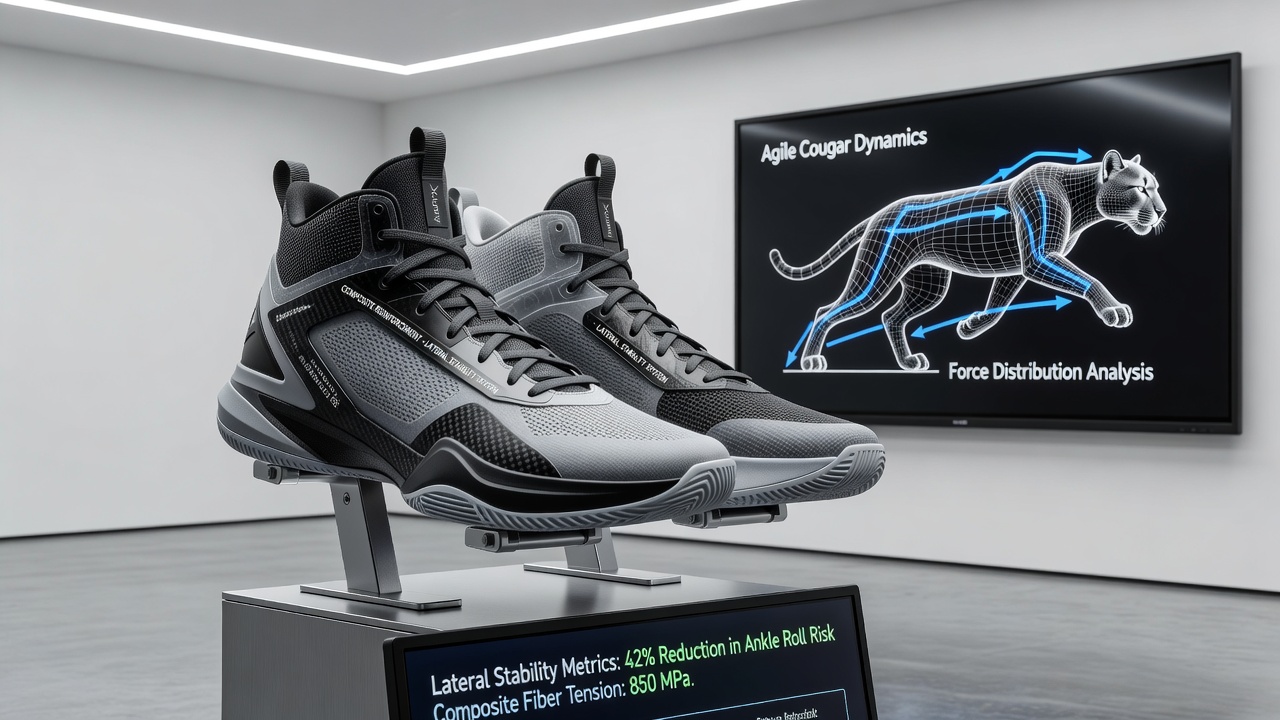
Validation of these designs relies on both laboratory simulations and on-court trials that replicate game conditions. Researchers employ motion capture systems alongside pressure-mapping insoles to quantify how composite reinforcements alter load distribution patterns across the plantar surface. Findings from such protocols indicate that targeted lateral beams effectively channel forces away from vulnerable joint areas, supporting sustained performance without accelerated fatigue in key stabilizing muscles.
Industry testing standards continue to evolve, incorporating more sophisticated multi-directional stress tests that account for the variable surfaces found in indoor arenas. The ball's in their court for manufacturers to refine these elements further, since ongoing data collection reveals subtle differences in how various composite layups respond to the specific demands of guard versus forward movement profiles. Experts have observed that iterative adjustments based on this feedback lead to measurable gains in overall shoe durability under repeated lateral loading cycles.
Future Directions in Reinforcement Technology
Emerging approaches explore hybrid composites that incorporate graphene-enhanced resins for even greater strength-to-weight ratios while maintaining the torsional control essential for court sports. These advancements build on existing frameworks by allowing finer tuning of flex points that accommodate individual biomechanical variations among players. Evidence from pilot programs suggests potential applications in customized production runs tailored to specific movement signatures captured through wearable sensor technology.
Integration with smart textiles also appears on the horizon, where embedded sensors within composite zones could provide real-time feedback on stability metrics during training. Such developments would extend the utility of current reinforcement strategies without altering the fundamental mechanical advantages already established in professional and recreational footwear alike.
Conclusion
Composite reinforcements have become integral to addressing the lateral stability requirements of basketball footwear, delivering measurable support for the agile movements that define the sport. Through precise material selection, strategic placement, and rigorous validation, these elements contribute to consistent performance across diverse playing conditions and athlete profiles. Continued refinement based on biomechanical insights promises further alignment between shoe design and the dynamic demands of court competition.