Shaft Bend Profiles in Golf Irons: Aligning Flex Characteristics with Swing Speed for Reliable Ball Flight Management
Carlo Walter · Jun 8, 2026
Shaft Bend Profiles in Golf Irons: Aligning Flex Characteristics with Swing Speed for Reliable Ball Flight Management
Golf iron shafts feature distinct bend profiles that determine how and where the shaft flexes during the swing, and these characteristics interact directly with a player's swing speed to influence launch angle, spin rate, and overall trajectory consistency. Manufacturers design bend profiles with specific kick points and stiffness gradients, while players select flex options such as regular, stiff, or extra stiff based on measured swing speeds that typically range from under 70 mph for beginners to over 95 mph for advanced competitors. Data from equipment testing shows that matching these elements reduces dispersion patterns on shots struck with irons, particularly in the 6-iron through pitching wedge range where control matters most.
Defining Bend Profiles and Their Mechanical Properties
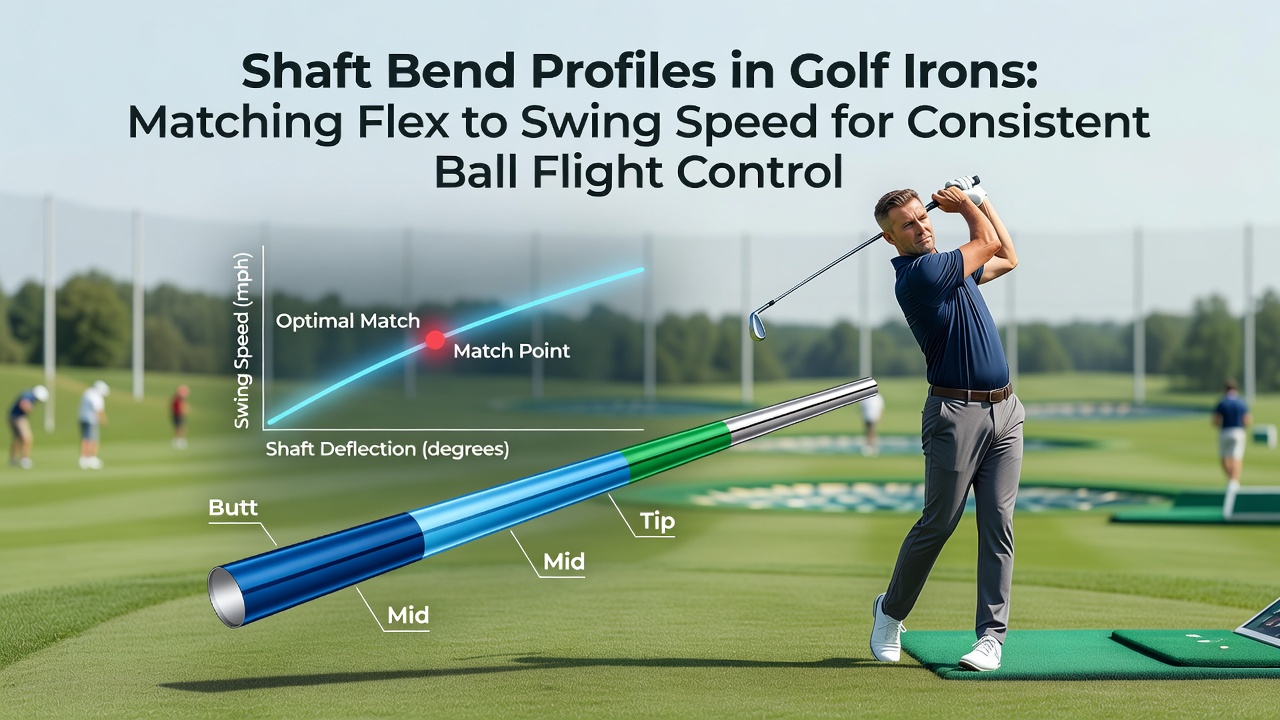
Bend profiles describe the curvature pattern along the shaft length, with low bend points concentrating flex near the tip for higher launch and more spin, mid bend points distributing flex evenly for balanced performance, and high bend points shifting flex toward the butt section for lower trajectories and reduced spin. Engineers measure these through deflection tests that apply force at multiple points, revealing stiffness values in cycles per minute or torque ratings expressed in degrees. Research indicates that shafts with identical overall flex ratings can produce different ball flights when their bend profiles vary, because the location of maximum bend alters the effective loft at impact by several degrees.
Club fitters use launch monitor data to map these profiles against individual swings, noting how a high bend point shaft paired with a fast transition can stabilize the clubface while a low bend point version might increase dynamic loft for players with smoother tempos. Studies conducted across multiple testing facilities demonstrate that profile selection affects not only initial launch conditions but also the shaft's recovery rate, which influences timing on shots requiring precise distance control.
Connecting Swing Speed to Appropriate Flex Selection
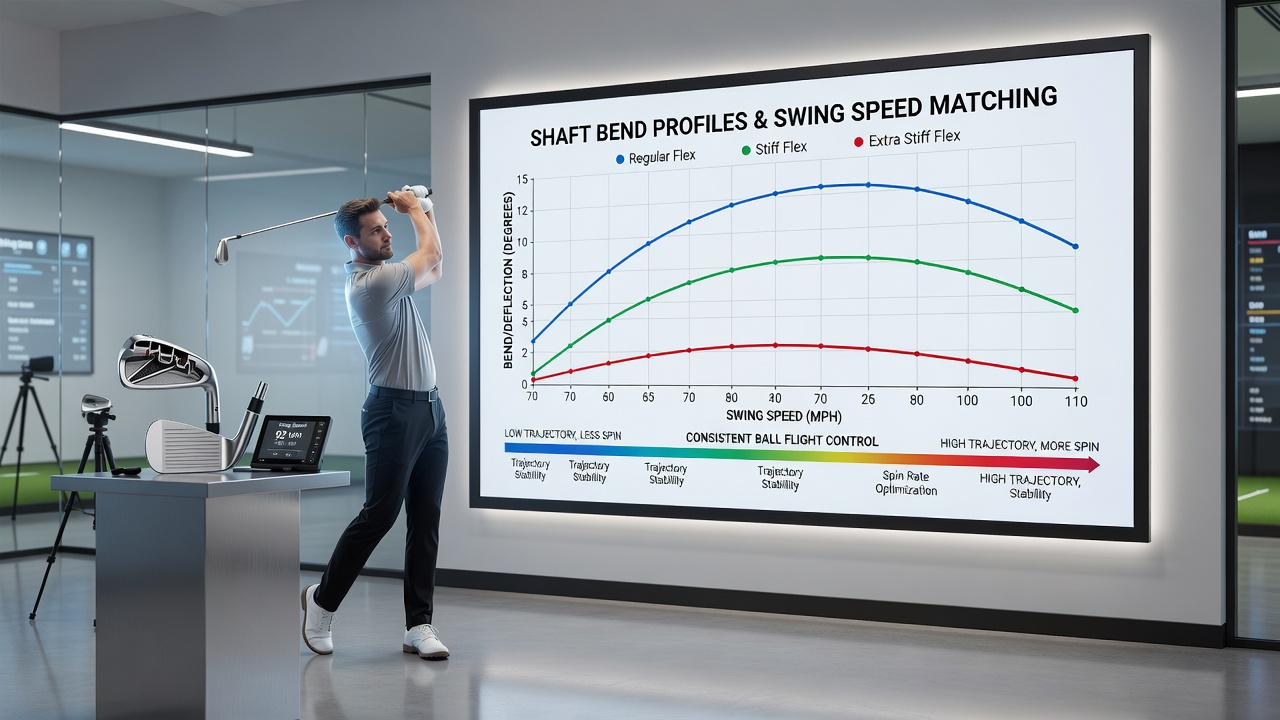
Swing speed serves as the primary metric for determining shaft flex, with slower speeds below 80 mph generally benefiting from more flexible shafts that load and unload at the right moment to square the face, whereas speeds above 90 mph often require stiffer constructions to prevent excessive bending that leads to inconsistent contact. Observers note that flex categories remain somewhat standardized across brands yet still vary in actual stiffness measurements, prompting fitters to rely on frequency analyzers rather than label designations alone. When swing speed increases by 5 mph, the corresponding shaft recommendation often shifts one flex category to maintain proper loading, according to aggregated fitting data collected over multiple seasons.
Players with moderate swing speeds around 82 to 88 mph frequently discover that a regular flex with a mid bend profile delivers repeatable ball flight, while those exceeding 92 mph see tighter shot patterns when switching to stiff flex options with higher bend points that resist twisting. Equipment reports highlight how mismatched flex creates timing issues, such as early release or late unloading, both of which alter spin and direction in measurable ways during controlled testing.
Achieving Consistent Ball Flight Through Proper Matching
Consistent ball flight emerges when the shaft bend profile complements swing speed so that the clubhead arrives at impact with optimal face angle and dynamic loft. Fitters achieve this by analyzing tempo, transition aggressiveness, and release patterns alongside raw speed numbers, because two golfers with identical speeds can require different profiles if their swing mechanics differ. Evidence from on-course data collection shows reduced standard deviation in carry distance and dispersion when profiles align with speed, particularly on approach shots between 100 and 150 yards where small errors compound.
June 2026 brings renewed attention to these fitting principles as professional tours prepare equipment for major events, with data from earlier seasons indicating that players who updated shaft specifications based on updated swing speed measurements achieved more predictable trajectories under varying wind conditions. Manufacturers continue refining composite materials to offer narrower stiffness bands within each flex category, allowing finer adjustments without changing entire shafts.
Practical Considerations in Equipment Selection and Testing
During fitting sessions, technicians measure swing speed at multiple points in the swing arc rather than relying solely on peak values, because acceleration patterns determine how the shaft loads. They then test combinations of bend profiles and flexes on launch monitors that track parameters including spin axis, launch angle, and smash factor. Players transitioning between indoor and outdoor environments often notice that temperature affects shaft stiffness slightly, though modern materials minimize these variations compared with older steel constructions.
Resources such as R&A equipment guidelines provide baseline standards for shaft performance characteristics, while Canadian golf association fitting protocols offer additional regional data on matching practices. These references help fitters establish consistent methodologies across different testing environments.
Conclusion
Shaft bend profiles and flex selection based on swing speed form a core element of iron fitting that directly supports consistent ball flight, with testing data confirming measurable improvements in accuracy and distance control when alignment occurs. Continued advancements in measurement tools and material science allow increasingly precise matches, supporting players across all skill levels in achieving repeatable results on the course.