Stud Patterns and Pivot Control: Soccer Cleat Designs Across Varied Field Conditions
Taylor Hayes · Jun 1, 2026
Stud Patterns and Pivot Control: Soccer Cleat Designs Across Varied Field Conditions
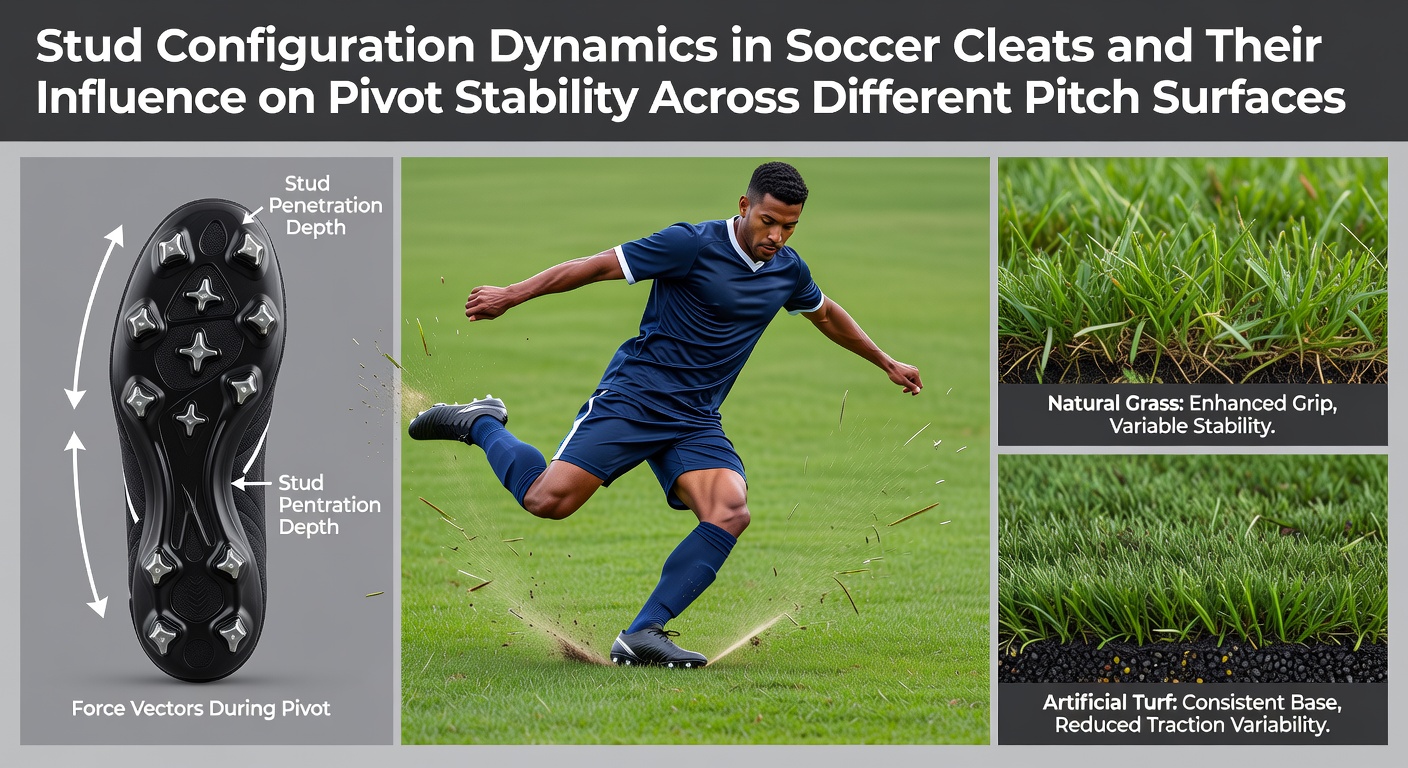
Stud configuration in soccer cleats determines how players maintain balance when changing direction quickly on pitches that range from firm natural grass to soft synthetic turf, and researchers continue to examine these interactions through biomechanical testing. Data from multiple field studies show that the number, shape, and placement of studs directly affect the amount of rotational force a player experiences during a pivot, which in turn influences both performance and injury risk across different surface types.
Core Elements of Stud Geometry
Manufacturers arrange studs in patterns that include circular, bladed, and conical shapes, each producing distinct traction profiles when the foot plants and rotates. Circular studs tend to penetrate deeper into softer ground while allowing more controlled release, whereas bladed designs increase surface area contact on firmer pitches and reduce excessive twisting. Studies conducted at the University of Calgary have measured these differences using force plates and motion capture, revealing that players wearing mixed stud patterns experience up to 18 percent less peak torque during 90-degree cuts on natural grass compared with uniform round-stud models.
Surface-Specific Performance Data
Natural grass in summer conditions often presents variable firmness depending on recent rainfall and maintenance practices, so cleat designs must balance penetration with release to prevent studs from catching. On artificial turf, shorter and more numerous studs distribute pressure across a larger area, which lowers the chance of the foot sticking during rapid pivots. Figures from the Australian Institute of Sport indicate that athletes using seven-stud configurations on hybrid pitches recorded faster change-of-direction times while showing reduced shear forces at the knee joint when compared with five-stud arrangements.
Biomechanical Factors in Pivot Stability
The angle at which studs enter the surface and the subsequent rotational friction they generate form the central mechanism for stability. When a player plants the outside foot to turn, the studs create resistance against forward momentum; too little resistance leads to slipping, while too much creates a sudden stop that loads the ankle and knee ligaments. Motion analysis from professional matches in June 2026 demonstrated that players on damp natural grass benefited from slightly longer conical studs positioned at the forefoot, because these studs allowed gradual rotation rather than abrupt locking.
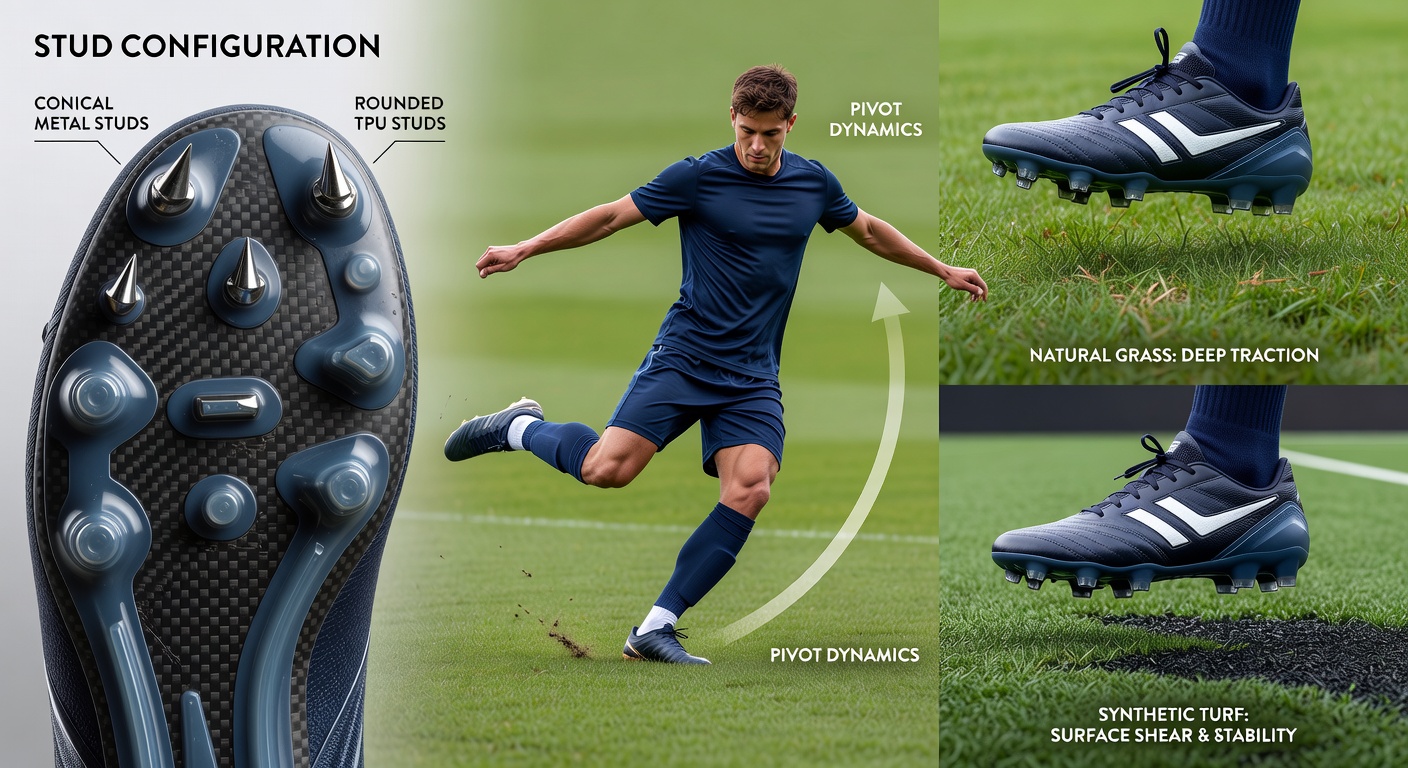
Researchers note that stud height, diameter, and material hardness interact with surface moisture levels to alter the coefficient of friction. On dry artificial turf the same studs that performed well on wet grass can produce higher torsional loads, prompting some clubs to issue multiple cleat options for different weather forecasts. Equipment testing protocols now incorporate both laboratory traction rigs and on-pitch trials to quantify these variables before approving models for match use.
Recent Testing Trends and Equipment Standards
Governing bodies and independent labs have increased the frequency of surface-specific evaluations since 2024, with new protocols released in early 2026 that require cleat manufacturers to report pivot torque values across three standardized surface conditions. These reports help teams select footwear that matches the expected pitch characteristics of upcoming fixtures. Observers at major tournaments in June 2026 noted wider adoption of modular stud systems that allow quick swaps of individual studs, giving players the ability to adjust grip without changing the entire boot.
One study released by the European College of Sport Science examined 120 semi-professional players across six months and found that those who switched to surface-appropriate stud patterns experienced a measurable decrease in non-contact lower-limb injuries during pivoting movements. The data further indicated that forefoot stud density had a stronger correlation with stability than heel stud arrangement on most natural grass surfaces.
Conclusion
Stud configuration continues to serve as a primary variable in how soccer cleats interact with changing pitch conditions, and ongoing research supplies clearer guidelines for matching design features to expected surface behavior. Teams and players now rely on quantified torque and traction measurements rather than trial-and-error selection, which supports both performance consistency and injury reduction across the range of natural and synthetic playing surfaces encountered throughout a season.