Textile Layering Approaches Ensuring Thermal Consistency in Apparel for Basketball to Trail Activity Changes
Alex Griffin · Aug 6, 2026
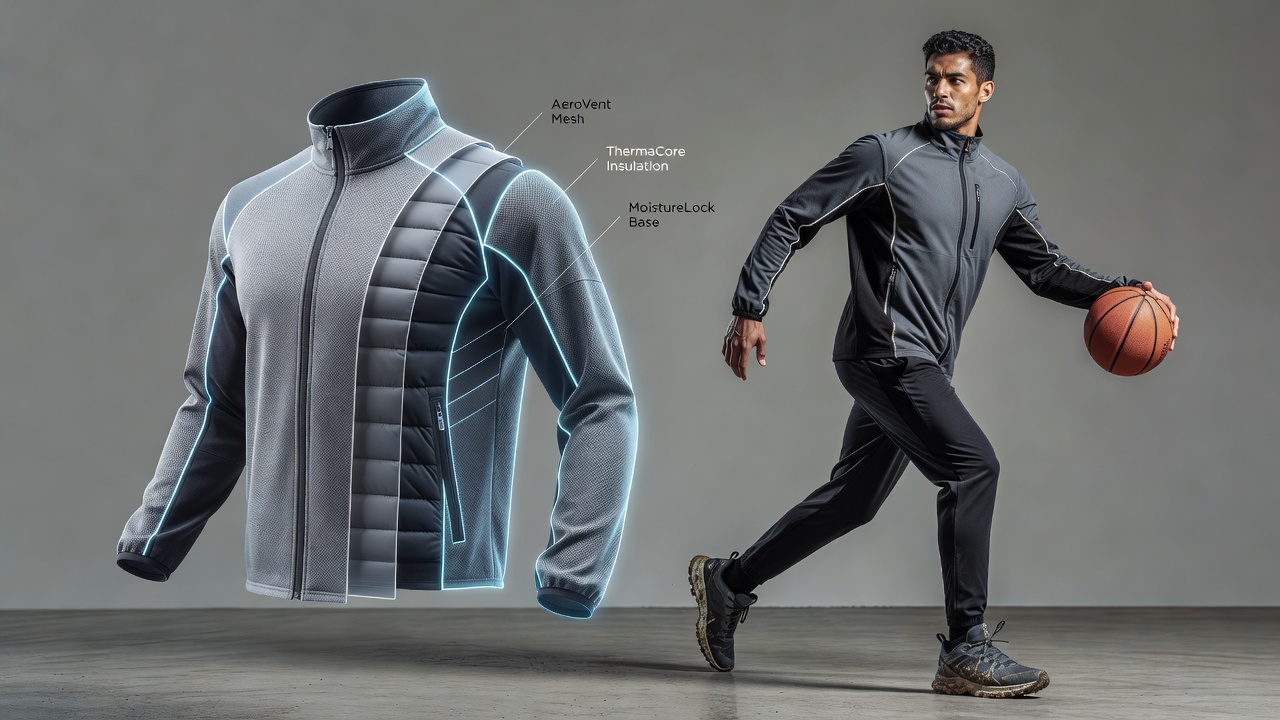
Textile Layering Approaches Ensuring Thermal Consistency in Apparel for Basketball to Trail Activity Changes
Athletes frequently shift between indoor basketball courts and outdoor trail environments where rapid changes in temperature, humidity, and physical exertion demand apparel constructed from integrated textile layers that maintain core temperature stability through moisture management and insulation adjustments, and researchers have documented how these systems combine base layers with wicking properties, mid-layers for heat retention, and outer shells with variable breathability to address both sweat accumulation during high-intensity court play and cooling winds on trails.
Data from performance monitoring equipment shows that such layered configurations can limit body temperature swings to within 2 degrees Celsius across activity transitions, according to findings published in textile engineering reports, while base fabrics often incorporate synthetic fibers like polyester blends treated with hydrophilic coatings that draw perspiration away from the skin during basketball sessions that elevate heart rates above 160 beats per minute.
Base Layer Construction and Moisture Dynamics
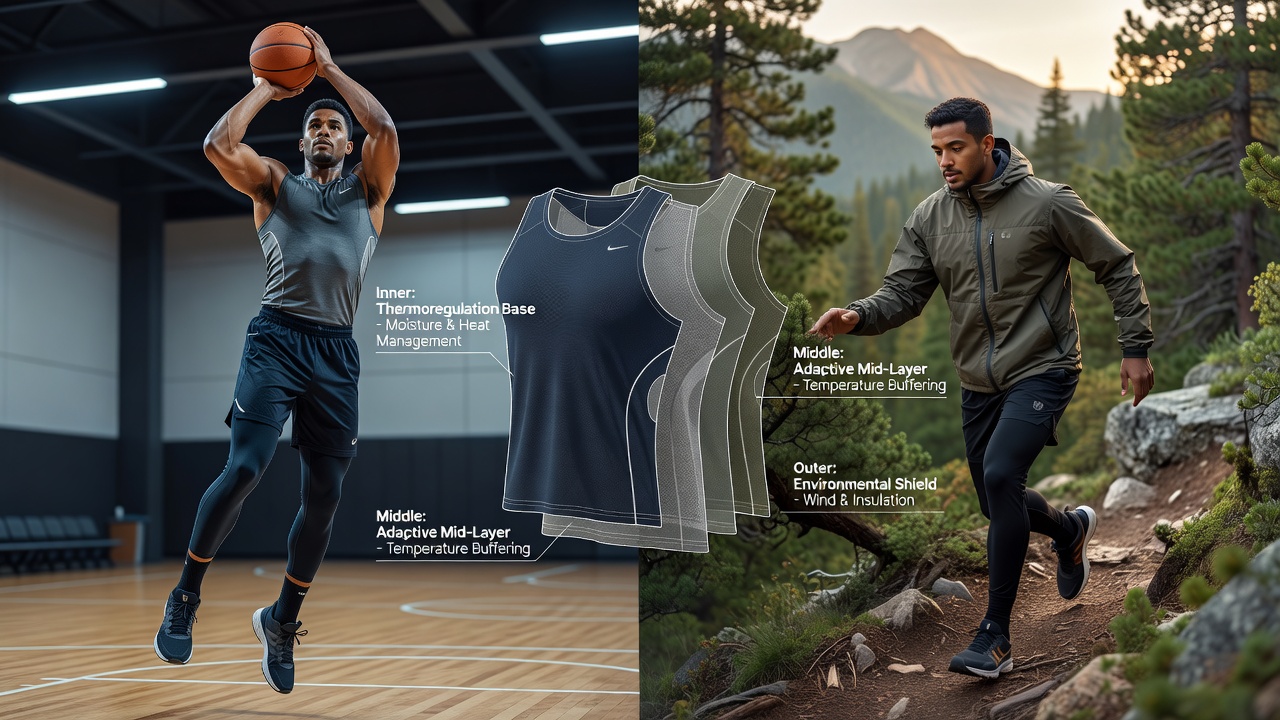
Base layers form the foundation of these systems because they sit directly against the skin and initiate the evaporation process through capillary action in knitted structures with mesh zones placed at high-sweat areas such as the torso and underarms, and manufacturers achieve this by varying stitch densities so that areas of greater exertion receive enhanced airflow channels without compromising overall coverage. Studies conducted at institutions in Canada reveal that athletes wearing these base layers during combined court and trail sessions experience reduced post-activity chill compared to single-fabric garments, since the wicking action continues into the trail phase where lower ambient temperatures accelerate cooling if moisture remains trapped.
Mid-Layer Insulation and Adaptive Properties
Mid-layers add variable insulation through fleece or synthetic down alternatives that trap air pockets for warmth retention once the athlete leaves the heated indoor environment, yet these materials often feature zoned compression or stretch panels that allow freedom of movement during trail navigation, and as of August 2026 several European research consortia have tested hybrid mid-layers incorporating phase-change materials that absorb excess heat during basketball bursts and release it gradually on cooler trails. Observers note that this adaptive mechanism relies on microencapsulated compounds embedded in the fibers, which respond to temperature thresholds between 28 and 35 degrees Celsius without requiring electronic controls, thereby keeping the apparel lightweight for extended use.
Outer Shell Features for Environmental Protection
Outer shells complete the integration by providing wind and light precipitation resistance while permitting vapor escape through membrane technologies such as microporous laminates, and these layers frequently include articulated patterning that accommodates the arm swing of basketball followed by the varied gait of trail running. Research from Australian textile laboratories indicates that shell fabrics with directional permeability reduce internal humidity buildup by 25 percent during transitions, because the material allows outward moisture transfer at rates calibrated to match the metabolic heat output of mixed activities, and users report sustained comfort when moving from enclosed courts at 22 degrees Celsius to shaded trails dropping to 12 degrees Celsius.
Industry testing protocols evaluate these combined systems under simulated conditions that replicate the sequence of intense court intervals followed by moderate trail efforts, with sensors placed at multiple body sites to track skin and core temperatures over two-hour periods, and results consistently demonstrate that properly integrated layers prevent the post-exercise temperature drop that single-layer apparel often permits. Experts have observed that seam construction plays a supporting role since taped or welded joins minimize cold spots where air infiltration could occur during movement between environments.
Material Innovations and Performance Data
Developments in fiber technology continue to refine these integrations because new polyester and nylon variants offer improved durability against abrasion on trails while retaining the softness needed for court contact, and one study from a United States research center found that garments incorporating recycled content maintained equivalent thermal performance to virgin materials across repeated wash cycles. What's interesting is how the layering sequence itself contributes to stability, since reversing the order disrupts the moisture gradient and leads to greater temperature variance according to controlled trials.
Additional elements such as reflective trims or ventilation zippers appear in some designs to address specific trail conditions like low light or sudden elevation changes, yet the core principle remains the coordinated function of each textile stratum to buffer external fluctuations. Figures from performance apparel evaluations show that athletes using these systems sustain consistent energy output during transitions because less metabolic energy diverts to thermoregulation tasks.
Conclusion
Layered textile integration therefore represents a systematic approach to apparel design that addresses the distinct thermal demands of basketball-to-trail activity transitions through sequential material properties, and ongoing refinements in fiber treatments and construction methods support broader application across multi-sport scenarios where temperature stability directly influences endurance and recovery metrics.