Thread Density Patterns in Performance Socks That Support Blister Prevention in Mixed Trail and Court Training
Alex Griffin · Aug 3, 2026
Thread Density Patterns in Performance Socks That Support Blister Prevention in Mixed Trail and Court Training
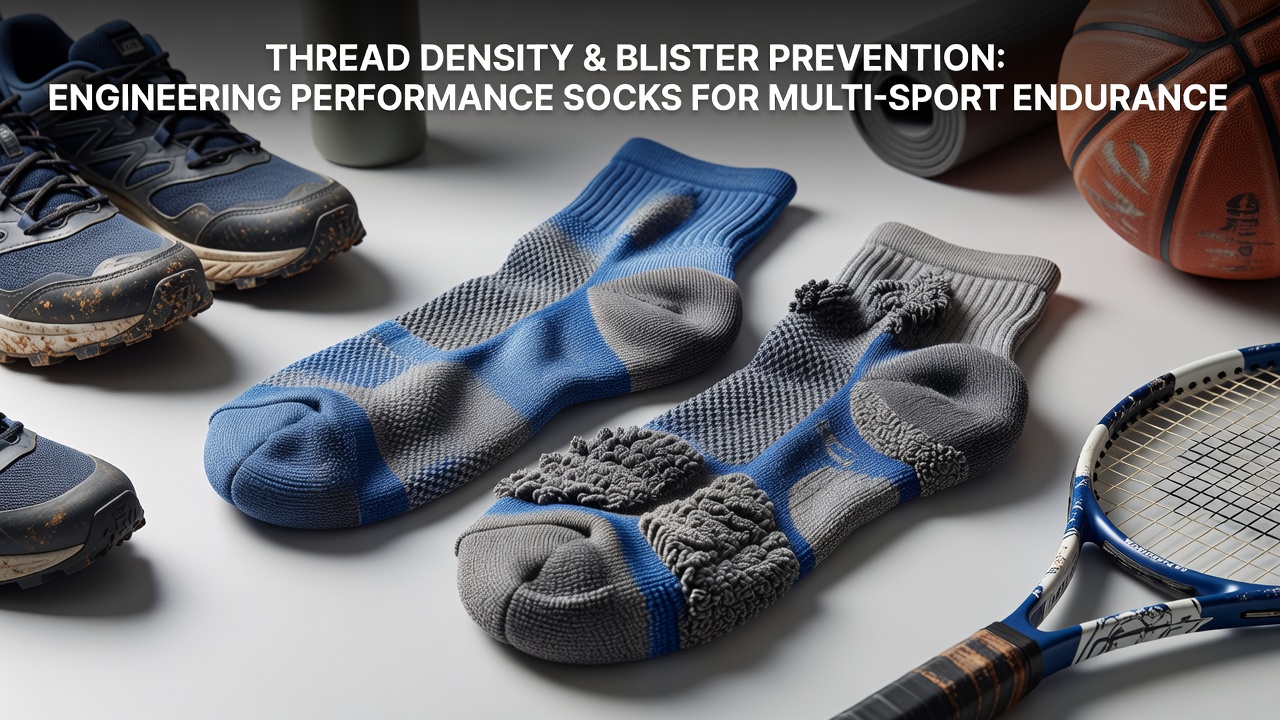
Thread density patterns refer to the specific arrangement and concentration of fibers within sock construction, and these patterns play a measurable role in managing friction and moisture during prolonged physical activity. Athletes who combine trail running with court sessions face repeated shifts in surface demands, foot movement patterns, and sweat production, which increase the likelihood of blister formation when sock materials fail to adapt. Research from textile engineering labs shows that zones with higher thread counts per square centimeter create tighter interfaces that limit shear forces between skin and shoe, while lower density areas allow for targeted ventilation and flexibility.
Understanding Thread Density in Sock Construction
Manufacturers control thread density through knitting techniques that vary stitch tightness and yarn composition across different regions of the sock. Higher density sections typically appear in high-friction zones such as the heel cup and ball of the foot, where data from biomechanical studies indicate peak pressure points occur during both uphill trail strides and lateral court cuts. Lower density knitting occupies arch and instep regions to reduce bulk while maintaining overall fit. Observers note that this zoned approach emerged from iterative testing in performance apparel labs, where engineers measured friction coefficients under simulated multi-hour wear cycles.
Material choices further influence density outcomes, because synthetic filaments like polyester and nylon pack more tightly than natural fibers when knitted at equivalent gauges. Studies conducted at research institutions in Canada have quantified how a 20 percent increase in thread density within the heel zone correlates with reduced relative movement between sock and skin during repetitive impact. Those measurements matter for athletes logging extended sessions that alternate between uneven trail surfaces and smooth court floors.
Blister Formation Mechanics During Combined Training
Blisters develop when repeated shear stress separates skin layers and fluid accumulates in the resulting space. In mixed training cycles, trail running introduces vertical loading and torsional twist, while court movements add rapid lateral accelerations that compound friction at contact points. Thread density patterns mitigate these forces by altering the coefficient of friction at the skin-sock interface, according to findings published in sports medicine journals. Socks engineered with graduated density reduce moisture retention in critical areas, which in turn limits the softening of skin that precedes blister onset.
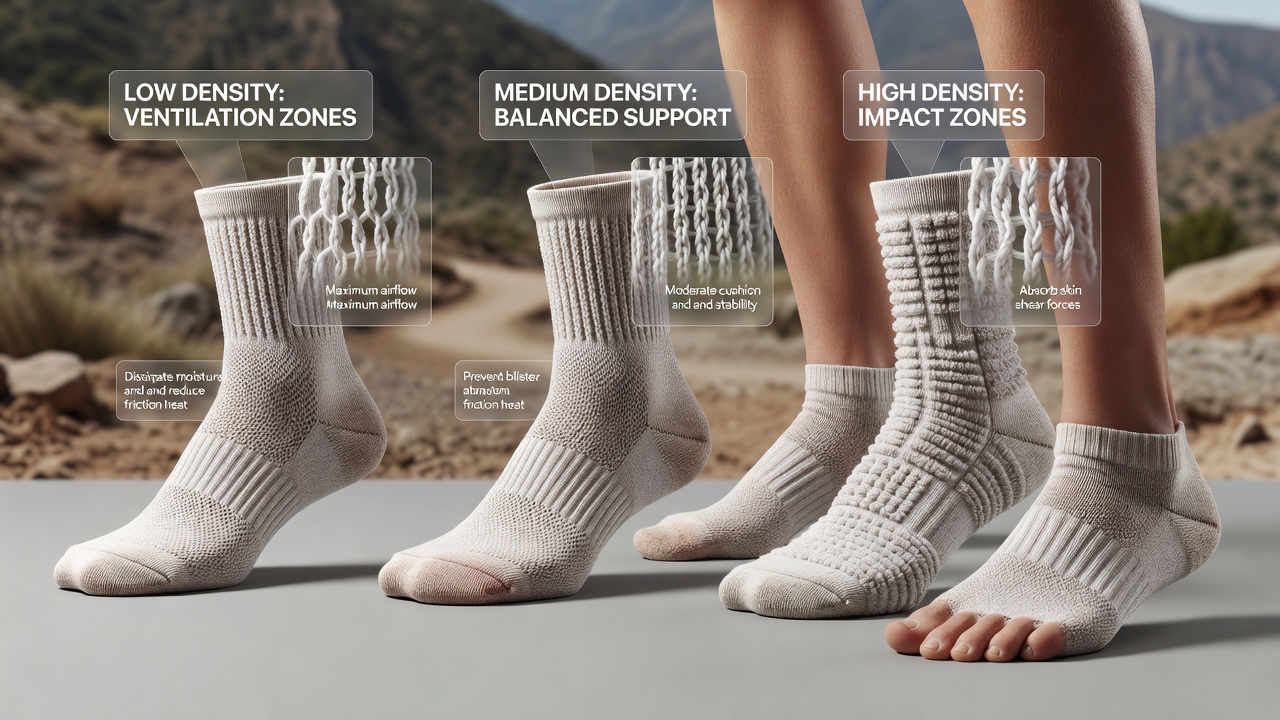
Evidence from field observations collected during summer training blocks reveals that athletes wearing uniform-density socks experience higher blister incidence rates after five or more consecutive days of combined training. In contrast, patterned constructions distribute pressure more evenly, and this distribution shows up in reduced reports of hot spots at the end of sessions. The pattern effect becomes especially relevant during August 2026 training cycles, when many multi-sport programs increase volume ahead of fall competitions.
Application to Trail and Court Transitions
Trail surfaces demand socks that maintain integrity under variable compression from rocks and roots, whereas court play requires breathability to handle sustained indoor heat. Thread density patterns address both needs by placing reinforced zones precisely where foot strike patterns differ. Researchers at European sports science centers have documented how forefoot density increases of 15 to 25 percent improve stability during quick stops on hardwood while still permitting enough stretch for trail unevenness. This balance helps athletes avoid the cumulative fatigue that leads to altered gait and subsequent blister risks.
Case data from training groups that alternate daily between trail and court environments indicate measurable differences when sock thread patterns match activity demands. One program tracked participants over eight-week blocks and recorded fewer interruptions from foot issues when density was calibrated to each sport's primary movement vectors. The same data sets show that mismatched socks, regardless of overall cushioning, produced higher friction readings at transition points between activities.
Design Considerations for Extended Cycles
Longer training cycles amplify small differences in sock performance because repeated exposure compounds micro-trauma at friction sites. Thread density patterns that incorporate reinforced seams and graduated compression help maintain consistent contact without constriction. Industry reports from textile associations highlight ongoing refinements in knitting machinery that allow precise control over density transitions, reducing the abrupt changes that can create new pressure points. Athletes preparing for multi-week blocks benefit from these refinements because the patterns support recovery between sessions by limiting tissue irritation.
Additional factors such as seam placement and yarn elasticity interact with density to shape overall outcomes. When seams align with lower density zones, the risk of chafing decreases, and this alignment appears in several commercial models tested under controlled laboratory conditions. Those tests used standardized protocols that replicate the combined loading seen in trail-to-court schedules.
Conclusion
Thread density patterns represent a targeted engineering approach within performance socks that addresses blister prevention through localized friction management and moisture control. Data gathered across varied training environments confirm that zoned constructions deliver measurable advantages during extended cycles that blend trail running with court sessions. Continued refinement in knitting technology and biomechanical testing supports further optimization of these patterns for athletes facing repeated surface transitions.