Torque Modulation in Golf Driver Shafts: Enhancing Energy Transfer for Windy Fairway Navigation
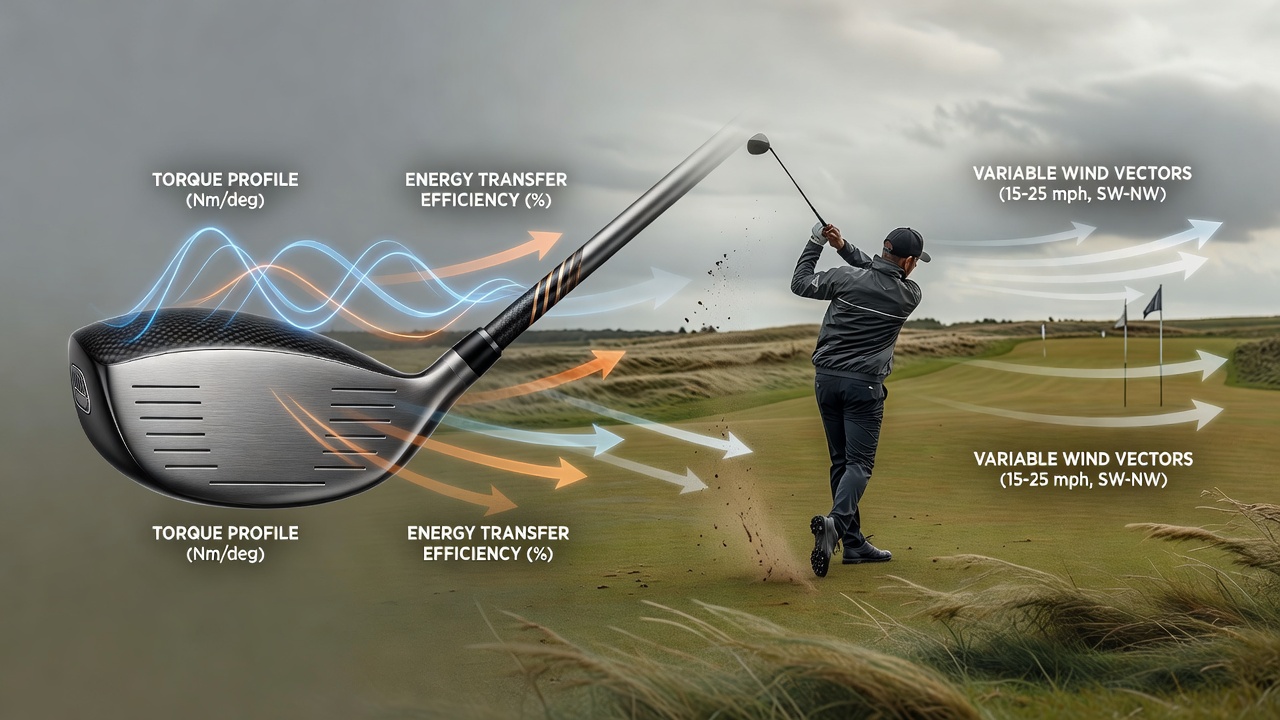
Shaft torque profiles describe the rotational resistance a driver shaft exhibits under the forces generated during a golf swing, and these characteristics directly shape how energy moves from the golfer through the clubhead into the ball. Manufacturers measure torque in degrees of twist under standardized loads, with lower values indicating stiffer resistance to rotation and higher values allowing more flex in that plane. Research from equipment testing labs shows that torque interacts with shaft bend profiles to stabilize the clubhead at impact, particularly when external forces like wind vectors push against the ball's flight path on open fairways.
Core Mechanics of Torque in Driver Construction
Modern driver shafts incorporate carbon fiber layers oriented at specific angles to control torque, and this engineering allows designers to tune how much the shaft twists during the downswing transition. Data collected from high-speed camera analyses reveals that shafts with torque ratings between 2.5 and 4.5 degrees commonly appear in models used by professionals navigating exposed courses, because these values balance energy retention with the ability to square the face against crosswinds. Observers note that torque works alongside kick point location, since a mid-kick shaft paired with moderate torque can reduce unwanted face rotation while preserving the whip that adds ball speed.
Those who've examined launch monitor outputs find consistent patterns where torque adjustments alter spin rates by 200 to 400 revolutions per minute under controlled conditions, which becomes relevant when wind speeds exceed 15 miles per hour on links-style layouts. The ball's initial direction and subsequent curve respond to these small changes, since even minor face angle deviations compound over 250-yard carries.
Energy Transfer Pathways Under Variable Conditions
Energy transfer begins with the golfer's body rotation loading the shaft, then releases through the hands and into the clubhead at the moment of impact. Shaft torque modulates this sequence by resisting or permitting twist that would otherwise dissipate kinetic energy sideways instead of forward. Studies conducted at university biomechanics facilities indicate that optimized torque profiles can maintain up to 95 percent of the potential energy in the system when the clubhead arrives square, whereas mismatched profiles lose measurable speed to torsional oscillation.
Wind vectors add another layer because they exert lateral pressure on the ball immediately after launch, and shafts that manage torque effectively help golfers keep the face more stable through the hitting zone. This stability allows the ball to start on the intended line before wind takes over, reducing the need for compensatory swing adjustments that often cost distance. Figures from tournament data tracking show players using lower-torque shafts recording tighter dispersion patterns on windy days, particularly when fairways run 40 to 50 yards wide.
Practical Considerations for Equipment Selection
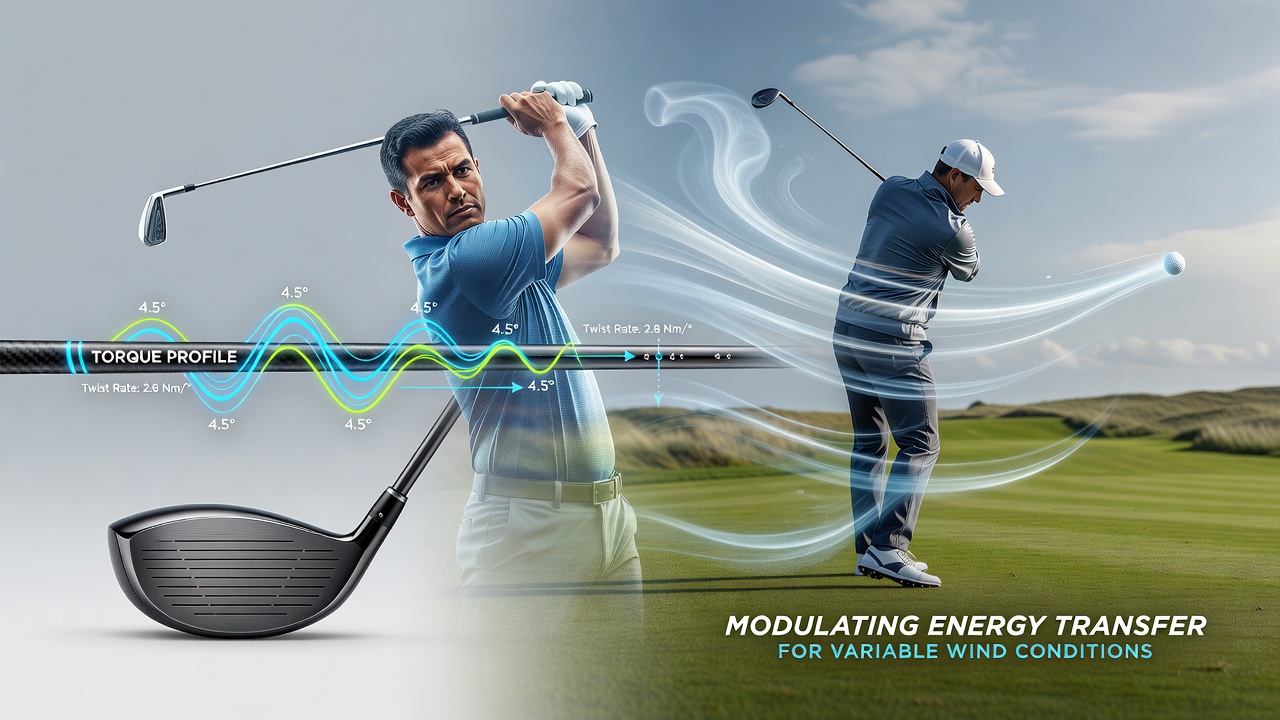
Golfers facing repeated exposure to shifting winds often work with fitters who test multiple torque options on outdoor ranges equipped with wind sensors. These sessions demonstrate how a shaft with 3.2 degrees of torque might outperform one with 4.8 degrees when gusts come from the right, because the stiffer profile limits the face from opening at the top of the backswing. Swing speed also factors in, since faster transitions amplify torque effects and require shafts engineered with additional torsional stiffness near the tip section.
Industry reports compiled ahead of the 2026 equipment review cycle highlight ongoing refinements in composite layering that allow torque to vary along the shaft length rather than remain uniform. Such designs give players more control over energy delivery without sacrificing the feel that helps time the release. Professional tours have recorded instances where players switched torque profiles mid-season and noted improved accuracy on exposed holes during events held in coastal regions.
Environmental and Course Factors
Exposed fairways magnify the importance of shaft characteristics because wind rarely blows in a single steady direction. Crosswinds, headwinds, and swirling gusts each demand different face angles at impact, and torque profiles that adapt well to these variations help maintain consistent launch conditions. Research published through the United States Golf Association's technical database shows measurable relationships between shaft torsional properties and carry distance retention when wind speeds reach 20 miles per hour or higher.
Players and instructors observe that those competing in June 2026 events on links courses will encounter conditions where precise torque matching becomes part of pre-tournament preparation. Fitting sessions increasingly incorporate portable wind simulators to replicate the vectors golfers will face, allowing data-driven decisions rather than trial and error on the course itself.
Conclusion
Shaft torque profiles represent a measurable variable that influences how drivers move energy from swing to ball, and their role grows more pronounced when golfers must contend with shifting wind vectors across open fairways. Continued testing and material advances provide players with options calibrated to specific swing dynamics and environmental demands, supported by launch monitor data and on-course performance records from various governing bodies and research institutions. Understanding these interactions allows equipment choices that align with the physical realities of the game on exposed terrain.