Vibration Control Mechanisms in Elliptical Trainer Frames That Reduce Joint Stress Over Long Cross-Training Sessions
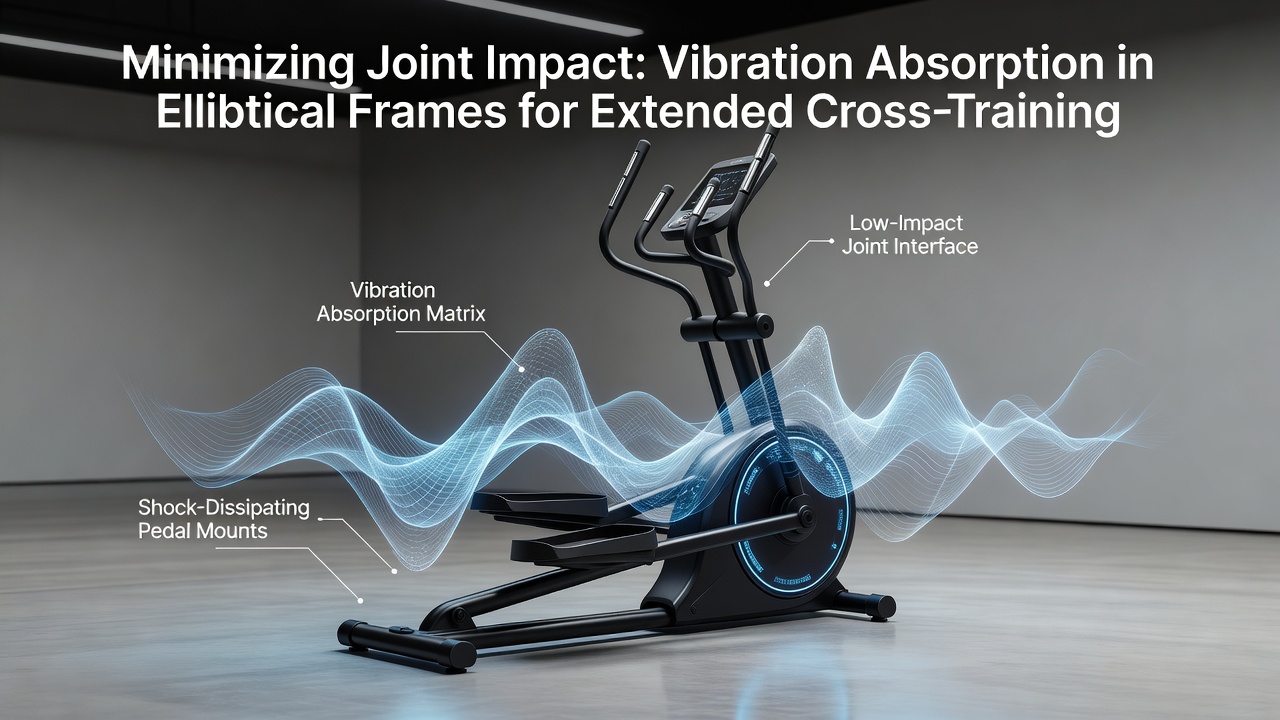
Elliptical trainers rely on frame engineering to manage vibrations that arise during repetitive motion, and these patterns play a direct role in how forces reach the user's joints over extended intervals. Manufacturers incorporate specific materials and structural layouts that channel energy away from the foot platforms and handlebars, which helps limit transmission to knees, hips, and ankles during sessions that last forty-five minutes or more.
Research from biomechanics laboratories indicates that frame designs often combine steel or aluminum bases with elastomeric isolators at key connection points, and these elements create distinct absorption zones that respond differently to stride frequency and user weight. Data collected in controlled settings shows that such configurations can reduce peak acceleration values at the pedal interface by measurable percentages when compared with rigid frames lacking dedicated dampening layers.
Material Choices That Shape Vibration Pathways
Frame builders select composites and alloys based on how each material distributes oscillatory energy along the length of the machine. Carbon-fiber reinforcements appear in premium models because they exhibit high stiffness-to-weight ratios, while rubber bushings and polyurethane pads sit at pivot locations to interrupt vibration travel. Observers note that these layered assemblies create a progressive dampening effect where high-frequency components dissipate quickly near the base, leaving lower-frequency movements that users perceive as smoother motion.
Studies conducted at institutions across North America and Europe reveal consistent patterns in how these materials perform under prolonged loading. One analysis from a Canadian university lab tracked vibration spectra during sixty-minute workouts and found that machines with multi-stage isolators maintained lower transmission rates to the user even as component temperatures rose and material properties shifted slightly. Engineers adjust the durometer ratings of these pads during production so the response matches typical cross-training cadences between sixty and ninety strides per minute.
Structural Geometry and Energy Distribution
The overall shape of the frame influences where vibrations concentrate and how they decay. Strut angles, rail curvatures, and cross-member placements guide forces toward reinforced sections that absorb rather than reflect energy back into the drive system. When manufacturers widen the stance width or add diagonal bracing, the altered geometry changes resonance frequencies, and users experience fewer sharp jolts during direction changes at the top and bottom of each elliptical arc.
Industry testing protocols adopted in 2025 require verification of these patterns across multiple user weight classes, and results from facilities in Australia and the United States demonstrate that optimized geometry keeps joint reaction forces within ranges associated with lower overuse risk during extended intervals. Technicians measure acceleration at multiple points along the frame using accelerometers, then map teh data to identify zones where additional damping material yields the greatest reduction in transmitted shock.
Performance During Extended Cross-Training Intervals
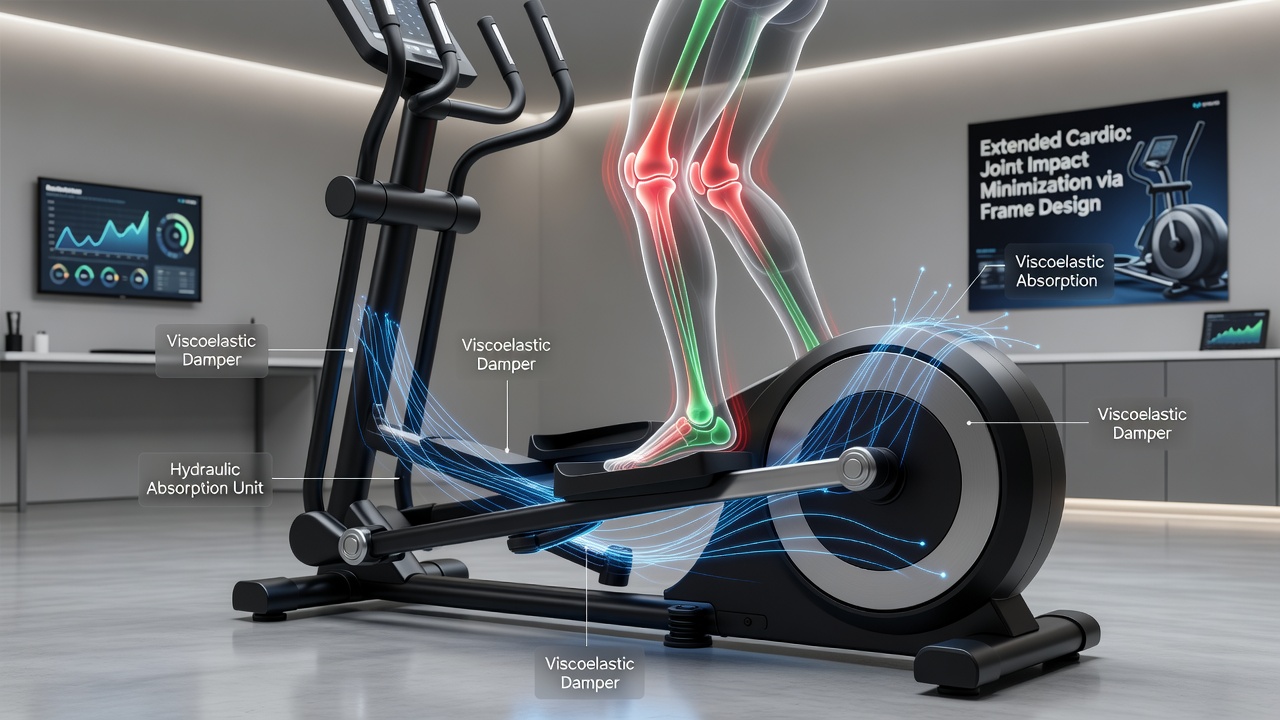
Longer sessions introduce cumulative effects that shorter tests often miss, including gradual changes in component temperature and slight shifts in alignment. Frame systems designed with redundant absorption paths maintain consistent behavior even after thirty or forty minutes of continuous operation. Research groups tracking heart-rate-matched workouts report that participants maintain steadier movement patterns on machines engineered for vibration control, which correlates with reduced reports of discomfort at the knee and lower back.
Standards bodies in the European Union updated equipment guidelines in June 2026 to include vibration exposure metrics for fitness devices, prompting several manufacturers to publish absorption data alongside traditional specifications. These updates align with broader efforts to quantify how machine design influences cumulative joint loading in recreational and clinical settings alike.
Measurement Techniques and Validation Data
Laboratories employ triaxial sensors and force plates to capture the three-dimensional nature of vibrations that travel through elliptical frames. By comparing input forces at the flywheel with output accelerations at the user interface, engineers quantify the effectiveness of each absorption layer. Figures released by research consortia show that well-tuned systems can attenuate certain frequency bands by more than half, particularly those above twenty hertz that correspond to rapid foot strikes.
Validation often occurs across multiple sessions to account for variations in stride length and resistance settings. Observers at university facilities in Asia have documented that machines with adaptive damping elements preserve their performance characteristics even when users alter cadence mid-workout, which supports consistent joint protection during interval-style cross-training protocols.
Conclusion
Frame-level vibration management in elliptical trainers rests on coordinated choices of materials, geometry, and placement of isolators that together limit energy transfer to the user. Ongoing measurements and updated equipment standards continue to refine these designs, providing data that equipment makers use to support joint comfort across longer training durations.